

What's Happening?
Nakoa-Wolf Momoa, son of actor Jason Momoa, has been cast in 'Dune: Part Three' to play Leto II, the son of Paul Atreides and Chani. This casting was reportedly made without the film's casting director, Francine Maisler, initially knowing his familial
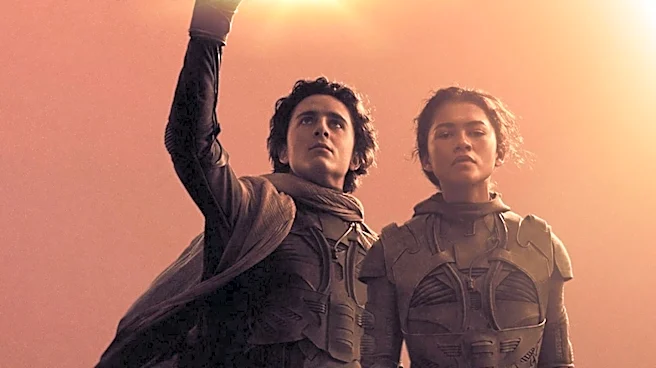
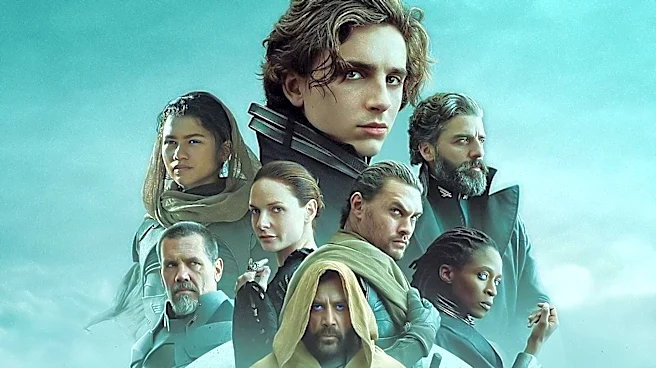
connection to Jason Momoa, who played Duncan Idaho in the first 'Dune' film and will return as Hayt in the third installment. Jason Momoa revealed on the 'SmartLess' podcast that he sent stunt footage of his son to producer Cale Boyter, with whom he had previously worked. Initially, Jason Momoa had hoped for a smaller role for Nakoa-Wolf, perhaps as a Fremen extra. However, Boyter informed him they were casting for Paul and Chani's children. Nakoa-Wolf's audition tape included combat footage he added himself, which impressed Maisler. He subsequently traveled to London for a three-and-a-half-hour test with director Denis Villeneuve and five other girls. His first day of shooting involved a scene with Zendaya, who plays Chani.
Why It's Important?
This development highlights the evolving landscape of Hollywood casting, where established actors' children are beginning to secure significant roles, sometimes through unconventional pathways. While Nakoa-Wolf's talent was recognized independently by the casting director, the initial connection through his father to a producer underscores the influence of industry networks. This could spark discussions about nepotism versus merit in casting decisions, especially in high-profile franchises like 'Dune.' For the 'Dune' franchise, the casting of Nakoa-Wolf Momoa as Leto II is crucial, as the character becomes central to the narrative in Frank Herbert's later novels, particularly 'Children of Dune.' His portrayal will be a key element in shaping the future direction and reception of the film series, potentially introducing a new generation of actors to a global audience. The story also provides insight into the behind-the-scenes process of major film productions, revealing how initial inquiries can lead to unexpected and significant casting outcomes.
What's Next?
Nakoa-Wolf Momoa will continue filming his role as Leto II in 'Dune: Part Three.' The production will likely proceed with further principal photography and post-production work. The film's release will be a significant event, with audiences eager to see how the character of Leto II is brought to life and how Nakoa-Wolf's performance is received. His role is pivotal for the franchise's future, as Leto II becomes a central figure in the 'Dune' saga. The film's success could further establish Nakoa-Wolf's acting career and potentially lead to more roles in major productions. Additionally, the return of Jason Momoa as Hayt, a ghola of Duncan Idaho, will be a point of interest for fans, as it signifies a complex narrative arc for his character. The dynamic between father and son both on and off-screen, given their respective roles in the 'Dune' universe, may also become a topic of public and media interest as the film approaches its release.
Beyond the Headlines
The casting of Nakoa-Wolf Momoa in 'Dune: Part Three' extends beyond a simple casting announcement, touching upon broader themes within the entertainment industry. It subtly highlights the generational aspect of Hollywood, where the children of established stars often find pathways into the industry, sometimes with initial advantages. While his talent was independently recognized, the initial introduction via his father's industry connections raises questions about equitable access and opportunity for aspiring actors without such lineage. This situation could fuel ongoing debates about the role of 'nepo babies' in Hollywood and the balance between inherited privilege and individual merit. Furthermore, the narrative of a child actor taking on a significant role in a major franchise like 'Dune' also speaks to the evolving nature of celebrity and public interest in the personal lives of actors and their families. It underscores how family connections, even when not directly influencing the final decision, can open doors that might otherwise remain closed, shaping the future landscape of cinematic talent.