





What's Happening?
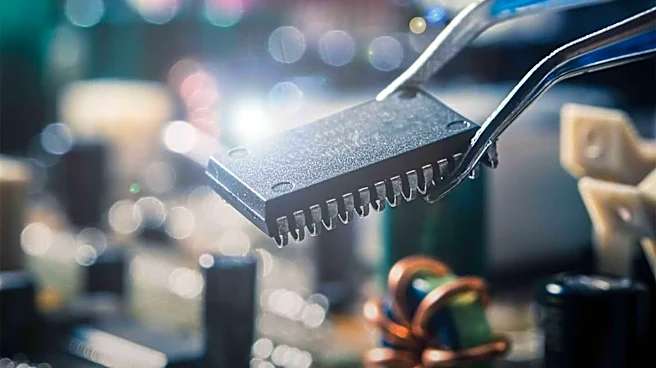
The manufacturing of microchips, particularly for advanced applications like AI, necessitates extremely precise and controlled environments known as cleanrooms. These facilities are designed to be as particle-free as possible to prevent contamination,
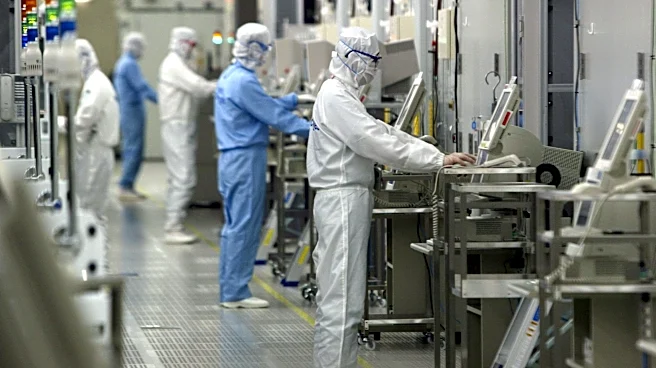
which can severely impair the production of sensitive electronics. Within cleanrooms, conditions such as temperature (typically 20–24°C), humidity (40–60%), and electrostatic discharge are meticulously monitored and controlled. Electrostatic charges, for instance, can destroy chips, leading to the use of dissipative materials and ionization systems to neutralize static. Modern chip factories also employ automation, with robots handling many process steps and mini-environments like FOUPs (Front Opening Unified Pods) protecting wafers during transport, all to minimize human influence, as humans are a significant source of particles. Employees wear specialized protective clothing, including overalls, gloves, hoods, and face masks, to maintain the stringent cleanliness standards required for semiconductor manufacturing.
Why It's Important?
The stringent requirements of cleanroom environments are fundamental to the functionality and reliability of modern microchips, which are the backbone of virtually all advanced technology, including AI. Any contamination or deviation from precise environmental controls can lead to defects, reducing yield and increasing production costs. This meticulous control ensures the creation of the tiny, intricate structures essential for high-performance semiconductors. For the U.S. technology sector, maintaining leadership in chip design and manufacturing relies heavily on the ability to operate and innovate within these highly specialized environments. The complexity and cost associated with establishing and maintaining such facilities also represent significant barriers to entry, concentrating advanced chip production among a few key players globally. The continuous advancement in cleanroom technology is therefore critical for the ongoing evolution of computing power and AI capabilities.
What's Next?
As microchip technology continues to advance, particularly with the increasing demands of AI applications, the requirements for cleanroom environments are expected to become even more stringent. This will likely drive further innovation in air filtration systems, particle control technologies, and automation to achieve even higher levels of cleanliness and precision. Research and development will focus on new materials and designs for cleanroom equipment, including specialized ergonomic chairs that meet both hygienic and ESD protection standards, while also ensuring employee comfort and productivity. The industry may also see increased integration of AI and machine learning within cleanroom operations for real-time monitoring, predictive maintenance, and optimization of environmental controls. These advancements will be crucial for manufacturing next-generation semiconductors with even smaller feature sizes and greater complexity, ensuring the continued progress of the digital economy.
Beyond the Headlines
The extreme precision and control required in microchip cleanrooms highlight a fascinating intersection of engineering, physics, and human factors. The necessity of minimizing human presence and influence, while simultaneously requiring highly skilled human operators, creates a unique workplace dynamic. This environment underscores the critical role of specialized equipment and infrastructure in technological progress, often unseen by the end-user. The investment in such facilities reflects the immense value placed on semiconductor technology in the global economy and national security. Furthermore, the continuous push for 'cleaner' environments in chip manufacturing can have broader implications for other sensitive industries, such as pharmaceuticals and biotechnology, by driving innovation in contamination control and sterile manufacturing practices. The meticulous nature of cleanroom work also emphasizes the hidden labor and technological sophistication behind everyday electronic devices, fostering a deeper appreciation for the complexity of modern manufacturing.