




What's Happening?
The Sealaska Heritage Institute (SHI) Board of Trustees has officially announced the dates for Celebration 2028, a biennial dance and culture festival for Southeast Alaska Native clans. The event is scheduled to take place from June 7 to 10, 2028, in
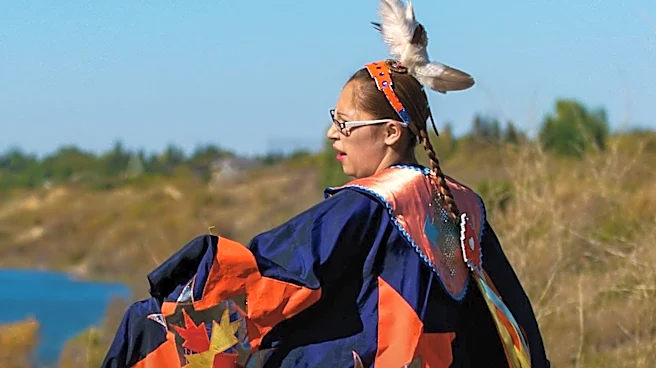
Juneau, Alaska. This gathering is recognized as the largest assembly of Tlingit, Haida, and Tsimshian peoples globally and has grown to be one of Alaska's most significant events since its inception in 1982. The SHI Trustees have also named Kake-based multigenerational group Ḵéex̱ʼ Ḵwáan as the lead dance group for the festival. This group, comprising 150 Tlingit, Haida, and Tsimshian members, traces its origins to the 1970s and began performing as Ḵéex̱ʼ Ḵwáan in 1989. Their role will involve leading the Grand Entrance and Grand Exit songs, which requires drumming and singing for up to three hours during each procession, marking the beginning and end of the Celebration. The event is expected to draw over 5,000 attendees, including up to 2,000 dancers, and will feature various activities such as a Juried Art Show, a native artist market, and a parade across multiple downtown Juneau venues.
Why It's Important?
Celebration 2028 holds significant cultural and economic importance for Juneau and the broader Alaska Native community. Culturally, it serves as a vital platform for the preservation and revitalization of Tlingit, Haida, and Tsimshian traditions, including traditional songs, dances, and regalia. The event fosters intergenerational knowledge transfer and strengthens community bonds among the participating clans. Economically, the Celebration is a substantial boon for Juneau, with a McDowell Group study indicating an economic impact of approximately $2 million. This influx of visitors supports local businesses, including hotels, restaurants, and shops, and provides opportunities for native artists to showcase and sell their work. The selection of Ḵéex̱ʼ Ḵwáan as the lead dance group highlights the importance of honoring established cultural groups and their dedication to traditional arts. The event's open invitation to the public also promotes cultural understanding and appreciation among a wider audience, contributing to a more inclusive and diverse community in Alaska.
What's Next?
With the dates for Celebration 2028 now set, participants and attendees are encouraged to make early arrangements, particularly regarding hotel accommodations, as Juneau's lodging fills up quickly for this popular event. The Sealaska Heritage Institute will likely continue its organizational efforts, coordinating the various components of the festival, including the Juried Art Show, native artist market, and parade logistics. Ḵéex̱ʼ Ḵwáan will begin or continue their preparations for their significant role as the lead dance group, which involves extensive practice and coordination for the Grand Entrance and Grand Exit ceremonies. Further announcements regarding specific event schedules, participating artists, and cultural workshops may be expected as the event approaches. The economic impact of the Celebration will be closely monitored, and local businesses will prepare for the anticipated increase in tourism and spending. The event will continue to serve as a focal point for cultural exchange and community engagement in Southeast Alaska.
Beyond the Headlines
Beyond its immediate cultural and economic benefits, Celebration 2028 underscores the ongoing efforts to sustain and promote Indigenous cultures in the United States. The event's longevity since 1982 demonstrates a resilient commitment to cultural heritage in the face of historical challenges. The emphasis on traditional songs, dances, and regalia is not merely a performance but a living expression of identity and connection to ancestral lands and practices. The economic impact, while significant, also reflects a growing recognition of the value of cultural tourism and the potential for Indigenous-led initiatives to contribute to regional economies. The involvement of multigenerational groups like Ḵéex̱ʼ Ḵwáan highlights the importance of passing down cultural knowledge and practices to younger generations, ensuring their continuity. This event also serves as a powerful statement of self-determination and cultural pride for the Tlingit, Haida, and Tsimshian peoples, reinforcing their presence and contributions within the broader Alaskan and American society.