






What's Happening?
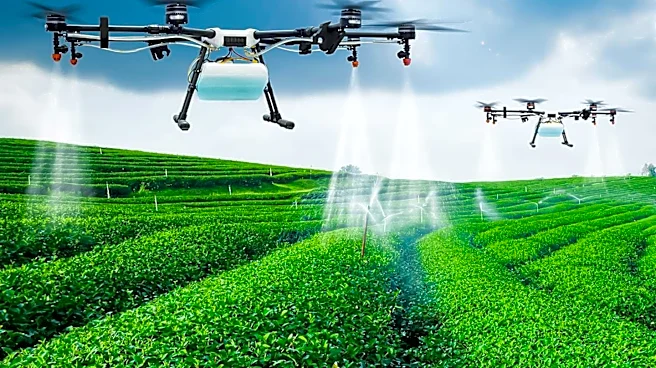
Artificial Intelligence (AI) systems integrated with drones are transforming livestock production by enabling high-precision digital phenotyping. This technology addresses the challenge of identifying the exact point of physiological maturity in animals
without inducing stress from traditional physical handling. Drones capture multispectral images and depth data, which are then processed in real-time using computer vision algorithms. This allows for volumetric reconstruction of animals, providing accurate estimations of weight and body composition with minimal error. The system utilizes LiDAR sensors or stereo cameras to generate dense point clouds, fed into convolutional neural networks (CNNs) trained to recognize anatomical landmarks across different cattle breeds. This innovation allows producers to monitor the Feed Conversion Ratio (FCR) individually, issuing alerts for slaughter or nutritional adjustments when an animal reaches its growth plateau, thereby optimizing resource use and reducing the carbon footprint of animal protein production.
Why It's Important?
This technological advancement has profound implications for the U.S. livestock industry, offering a paradigm shift from traditional, stress-inducing monitoring methods to non-invasive, data-driven approaches. By minimizing stress on animals, the technology helps preserve animal welfare, which is increasingly important for consumers and regulatory bodies. Reduced stress also prevents the activation of the hypothalamus-pituitary-adrenal (HPA) axis, which can negatively impact immunity and meat quality. For producers, the ability to precisely predict carcass yield allows for unprecedented logistical planning for meatpackers and exporters, leading to greater efficiency and profitability. Optimizing the Feed Conversion Ratio on an individual basis prevents waste of feed resources, contributing to more sustainable and environmentally friendly livestock operations. This precision farming approach can also accelerate genetic selection programs by providing detailed growth analysis, identifying lineages with superior development of specific tissues.
What's Next?
The next evolutionary step for this technology involves integrating computer vision with real-time internal metabolic data. This would entail correlating external volumetry captured by drones with circulating biomarkers, such as glucose and amino acid levels, without invasive devices. Further advancements are expected in synthetic biology and gene editing (CRISPR), where drone-collected data could feed real-time genomic selection algorithms. This would identify individuals with the most efficient alleles for converting biomass into protein under specific climatic conditions. The convergence of aerial robotics and bioinformatics is poised to transform pastures into living laboratories, optimizing each animal as a data point in a digitally managed production ecosystem. Overcoming challenges like visual occlusion in dense vegetation environments will be crucial for achieving total autonomy of these systems.
Beyond the Headlines
Beyond the immediate benefits of efficiency and animal welfare, this technology ushers in a new era of precision agriculture with broader ethical and societal implications. The extensive data collection on individual animals raises questions about data ownership, privacy, and the potential for over-optimization that might overlook the natural variability of life. The increasing reliance on AI and automation in livestock farming could also impact the human element of agriculture, potentially altering labor demands and the traditional roles of farmers. Furthermore, the ability to genetically select for specific traits with unprecedented precision, while offering economic advantages, could lead to a reduction in genetic diversity, posing long-term risks to resilience against diseases or environmental changes. This convergence of advanced robotics, AI, and biotechnology necessitates ongoing dialogue about responsible innovation and the long-term vision for sustainable and ethical food production.