




What's Happening?
Rivian Automotive is set to release a supervised self-driving system similar to Tesla's Full Self-Driving (FSD) later this year. CEO RJ Scaringe announced this development during a Masters of Scale event in Anaheim. The new system, an advanced driver-assistance
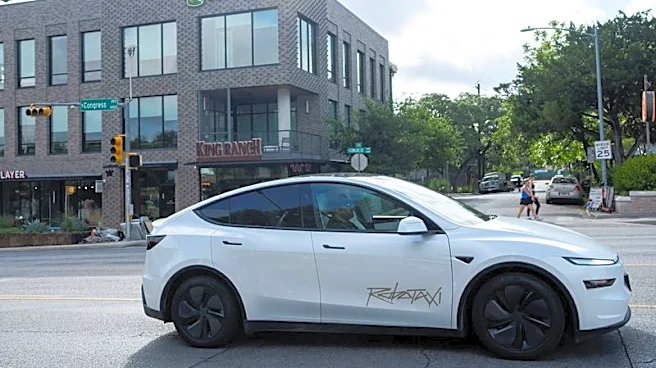
system (ADAS), will enable Rivian's second-generation vehicles and the new R2 model to perform point-to-point driving with supervision. This marks a significant upgrade from Rivian's current Universal Hands-Free system, which manages steering and speed control on marked roads but lacks the capability to navigate turns, traffic lights, or parking lots. The company is also planning to introduce unsupervised self-driving technology next year. Rivian's strategy includes developing autonomous driving capabilities for robotaxi fleets, supported by a $1.25 billion deal with Uber to potentially supply up to 50,000 R2 vehicles for Uber's robotaxi plans.
Why It's Important?
Rivian's move into autonomous driving technology represents a significant step in the competitive electric vehicle market, particularly against Tesla, which has been a leader in self-driving technology. By advancing its ADAS to a level comparable to Tesla's FSD, Rivian positions itself as a formidable player in the autonomous vehicle sector. This development could enhance Rivian's market share and appeal to consumers seeking advanced driving technologies. Additionally, the partnership with Uber could accelerate the deployment of autonomous vehicles in ride-hailing services, potentially transforming urban transportation and reducing reliance on human drivers. This shift could have broad implications for the automotive industry, labor markets, and urban planning.
What's Next?
Rivian plans to roll out its supervised self-driving system across its Gen 2 vehicles and the R2 model later this year, with unsupervised driving technology expected next year. The company's collaboration with Uber suggests a focus on scaling its autonomous vehicle capabilities for commercial use. As Rivian progresses, it may face regulatory challenges and competition from other automakers and tech companies investing in autonomous driving. Stakeholders, including investors and industry analysts, will likely monitor Rivian's technological advancements and market performance closely. The success of Rivian's autonomous initiatives could influence future partnerships and investments in the autonomous vehicle sector.