





What's Happening?
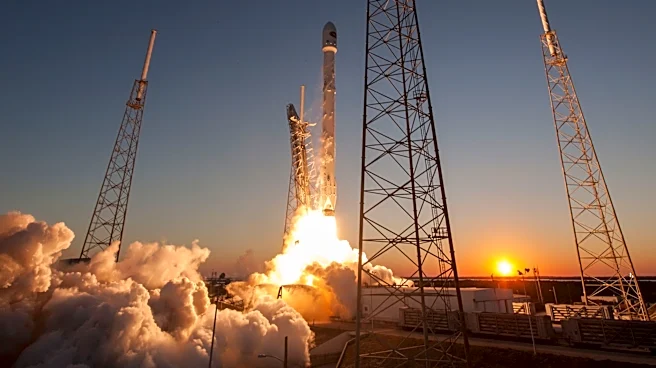
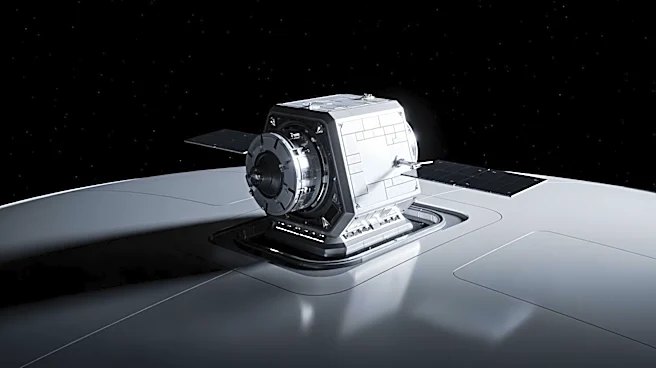
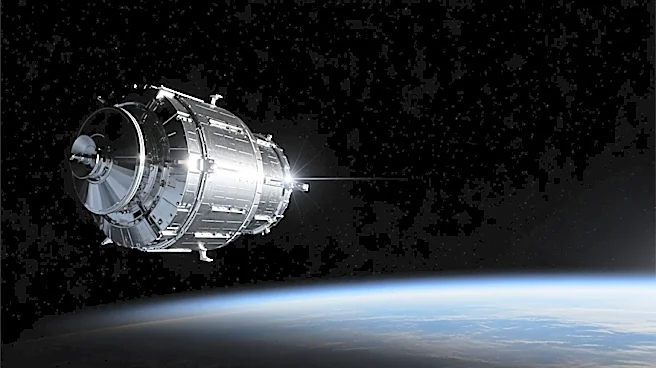
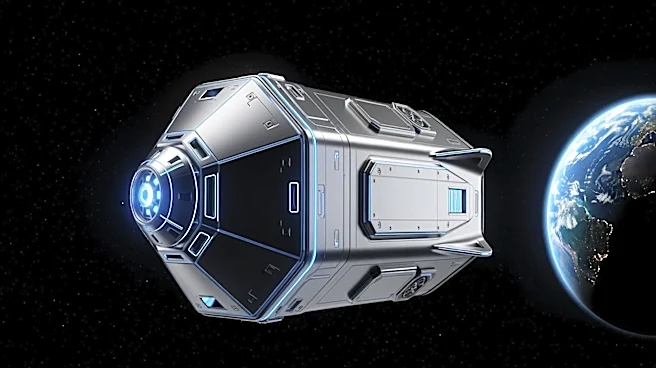
SpaceX has launched its first Starfall reentry capsule from Cape Canaveral, designed to transform how cargo is returned from orbit. The disk-shaped capsule, launched aboard a Falcon 9 rocket, is intended to support rapid point-to-point cargo delivery
and a self-sustaining commercial in-space manufacturing market. The capsule, measuring 3.1 meters in diameter, lacks a dedicated propulsion system and relies on external forces for reentry. It features cold-gas nitrogen thrusters for attitude control and parachutes for descent. The Federal Aviation Administration approved the test flights, which aim to demonstrate the capsule's capabilities and potential to replace the International Space Station for commercial production.
Why It's Important?
The Starfall capsule represents a significant advancement in space logistics, potentially reducing costs and increasing efficiency for in-space manufacturing. By offering a scalable solution for returning goods from orbit, SpaceX could enable new commercial opportunities in microgravity environments. This development positions SpaceX as a leader in orbital logistics, competing with other companies that rely on its launch services. The success of the Starfall capsule could lead to a shift in how space-based manufacturing and research are conducted, with broader implications for industries reliant on space technology.
What's Next?
Following the successful launch, SpaceX will conduct further tests to validate the Starfall capsule's performance and capabilities. The company plans to integrate Starlink Earth stations for real-time telemetry during reentry, overcoming traditional communication barriers. If successful, the Starfall capsule could become a key component of SpaceX's offerings, providing end-to-end solutions for orbital manufacturing and logistics. This could lead to increased competition in the space industry and drive further innovation in space technology.