






What's Happening?
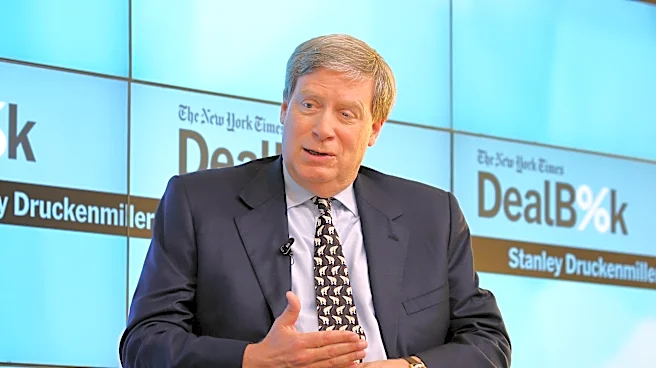
Stanley Druckenmiller, through his firm Duquesne Capital, established a remarkable investment record, particularly in its long-term performance. Starting in 1981 with approximately $800,000 and two clients, Duquesne Capital grew to manage around $12 billion
by the time its external fund closed in 2010. According to Bloomberg reports from that period, from 1986 onwards, the fund achieved an average annual return of approximately 30%. Notably, Duquesne Capital did not experience a single losing year over a 30-year period. Even during the 2008 financial crisis, the fund managed to generate a positive return of about +11%. This consistent profitability, even during significant market downturns, distinguishes Druckenmiller's performance in the financial industry.
Why It's Important?
Druckenmiller's sustained success with Duquesne Capital is highly significant in the financial world, demonstrating an exceptional ability to navigate diverse market conditions over decades. His record of achieving an average 30% annual return without a single losing year for 30 years, including positive returns during the 2008 financial crisis, sets a benchmark for investment management. This performance highlights the potential for skilled fund managers to generate substantial wealth and protect capital even in volatile environments. For investors, it underscores the value of long-term strategic thinking and robust risk management. For the broader financial industry, it serves as a case study in consistent outperformance, influencing investment strategies and the pursuit of alpha.
What's Next?
While Duquesne Capital closed its external fund in 2010, Druckenmiller continues to be an influential figure in finance, managing his personal wealth and offering insights into market trends. His investment philosophy and strategies are frequently studied and discussed by financial professionals and academics. The legacy of Duquesne Capital's performance will likely continue to inform investment education and inspire new generations of fund managers. Future market conditions and economic cycles will test whether similar long-term, consistent returns can be replicated by other investors, especially given the evolving complexities of global financial markets and technological advancements in trading.
Beyond the Headlines
Druckenmiller's achievement with Duquesne Capital goes beyond mere financial returns; it represents a mastery of market dynamics and a disciplined approach to investing. His ability to avoid losing years for three decades suggests a profound understanding of risk and opportunity, often involving macroeconomic analysis and tactical asset allocation. This record challenges the notion that consistent outperformance is impossible in efficient markets. It also raises questions about the unique qualities of legendary investors—whether it's innate talent, rigorous methodology, or a combination thereof. The story of Duquesne Capital serves as a testament to the power of compounding returns and the potential for exceptional individual skill to shape financial outcomes, offering valuable lessons for both institutional and individual investors.