






What's Happening?
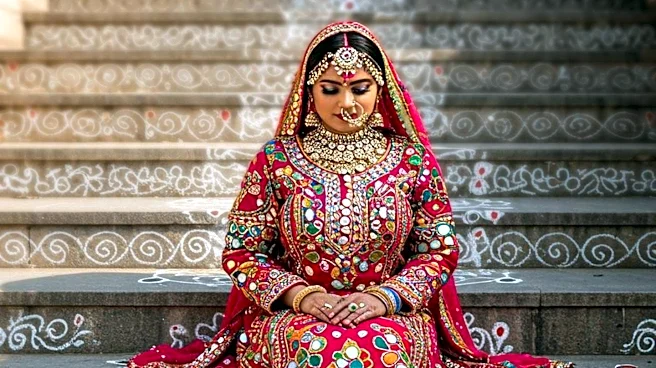
Actress Sharvari recently wore a maximalist sage blue lehenga from designer Karan Torani's 'Jogiya' collection for a Navratri celebration in Mumbai. The ensemble, which took over 400 hours to complete, is a vibrant display of Indian craftsmanship, featuring
patola-inspired prints, mirror work, beads, and intricate threadwork. The design draws inspiration from India's nomadic communities and the cultural exchange between the historic provinces of Sindh and Kutch, embodying a 'more-is-more' aesthetic. The voluminous skirt includes motifs of chaupad, trees of life, flowers, butterflies, geometric patterns, and oversized elephants, with a vermillion red waistband and border featuring pixelated heart-shaped designs. The accompanying choli is richly embellished with mirrors, cowrie shells, beads, and hand embroidery, complemented by a georgette odhni with a scalloped hem.
Why It's Important?
This event highlights the global appeal and intricate artistry of Indian fashion, particularly the maximalist aesthetic, which is gaining prominence beyond its traditional cultural context. For the U.S. fashion industry, this showcases the potential for cross-cultural influences and the growing market for artisanal, handcrafted luxury goods. The extensive labor and detailed craftsmanship involved in creating such a piece, requiring over 400 hours, underscore the value of traditional textile arts and the skilled artisans who preserve them. This could inspire U.S. designers to incorporate more elaborate techniques and cultural narratives into their collections, fostering a greater appreciation for diverse fashion traditions. It also points to a consumer trend towards unique, story-rich garments that stand in contrast to fast fashion, potentially influencing purchasing habits and promoting ethical production practices.
What's Next?
The visibility of such elaborate, handcrafted garments on public figures like Sharvari is likely to further popularize maximalist fashion and traditional Indian craftsmanship on a global scale, including in the U.S. We can anticipate an increased demand for similar artisanal pieces and a greater interest in designers who champion intricate detailing and cultural storytelling. This could lead to more collaborations between international designers and Indian artisans, bringing these unique crafts to a broader audience. Fashion retailers in the U.S. might start featuring more collections that incorporate these rich textures, patterns, and embellishments, moving beyond minimalist trends. Additionally, there could be a rise in educational initiatives or workshops aimed at preserving and promoting these traditional crafting techniques, ensuring their continuity and appreciation.
Beyond the Headlines
Beyond its immediate fashion impact, Sharvari's lehenga represents a deeper cultural narrative about identity, heritage, and the celebration of artistic legacy. The 'Jogiya' collection's inspiration from Sindhi roots and the cultural exchange between Sindh and Kutch speaks to the power of clothing as a medium for storytelling and preserving historical connections. In a globalized world, such pieces serve as cultural ambassadors, introducing diverse traditions and artistic philosophies to new audiences. This maximalist approach, with its emphasis on abundance and intricate detail, challenges the often-homogenized aesthetics of global fashion, advocating for individuality and the richness of cultural expression. It also highlights the economic importance of traditional crafts, providing livelihoods for skilled artisans and contributing to the cultural economy.