





What's Happening?
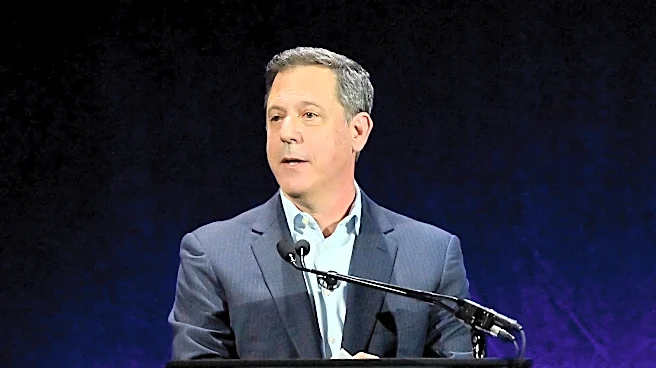
Lionsgate's Motion Picture Group chair, Adam Fogelson, has indicated the studio's strong interest in continuing the 'Hunger Games' franchise, particularly after the successful opening weekend of 'The Hunger Games: Sunrise on the Reaping'. The film, an adaptation
of Suzanne Collins' 2025 prequel novel, grossed $119.3 million from 4,018 North American locations, securing the top spot at the box office. This performance surpassed the domestic openings of the two most recent entries in the series. Fogelson emphasized the studio's respect for Collins as the 'architect' of the franchise and expressed eagerness to collaborate on future projects should she decide to write more stories. The film, directed by Francis Lawrence and starring Joseph Zada as Haymitch Abernathy, is set 24 years before the original 2008 book and had a budget of $150 million. Its box office impact significantly exceeded that of the 2023 prequel, 'The Hunger Games: The Ballad of Songbirds and Snakes', which opened to $44 million domestically.
Why It's Important?
The strong box office performance of 'The Hunger Games: Sunrise on the Reaping' signals a significant revitalization for the franchise and holds considerable importance for Lionsgate and the broader film industry. A successful continuation of a major franchise like 'The Hunger Games' can provide a stable revenue stream for studios, influencing investment decisions in similar intellectual properties. For Lionsgate, this success validates their investment in the prequel and potentially paves the way for more films, strengthening their position in a competitive market. The film's ability to 'relight the fire' with audiences, as noted by Fogelson, demonstrates that established franchises with compelling new narratives can still draw large numbers, even after previous entries had a more modest reception. This success could encourage other studios to revisit their own dormant or underperforming franchises, provided they can secure the original creators' involvement and deliver a story that resonates with the fanbase.
What's Next?
The immediate future for the 'Hunger Games' franchise hinges on author Suzanne Collins. Lionsgate has made it clear they are prepared to wait for Collins to develop new stories, with Adam Fogelson stating he would 'drop everything' to read any new material she creates. This indicates that while the studio is keen on expanding the universe, they are committed to respecting Collins' creative process and vision. The success of 'Sunrise on the Reaping' has already sparked discussions among fans about potential future storylines, suggesting a receptive audience for more content. Should Collins decide to write another book, a new film adaptation would likely follow, continuing the franchise's cinematic journey. The studio's strategy appears to be one of patience and collaboration with the original creator, rather than rushing into new projects without her direct involvement.
Beyond the Headlines
The success of 'The Hunger Games: Sunrise on the Reaping' highlights a broader trend in the entertainment industry: the enduring power of established intellectual property, particularly when original creators are involved. This approach contrasts with attempts to reboot or expand franchises without the original vision, which often face fan skepticism. The film's performance underscores the value of a 'giant fan base' and the importance of understanding their desires for new content. It also subtly touches upon the challenges of adapting complex narratives, especially when previous entries, like 'The Ballad of Songbirds and Snakes', explored less conventional themes such as a villain's origin story without the 'grand Hunger Games spectacle.' This suggests that while creative risks can be taken, a return to core elements that resonate deeply with the audience can yield significant commercial rewards. The emphasis on Collins' role as the 'architect' also reinforces the growing recognition of authors' critical contributions to cinematic universes.