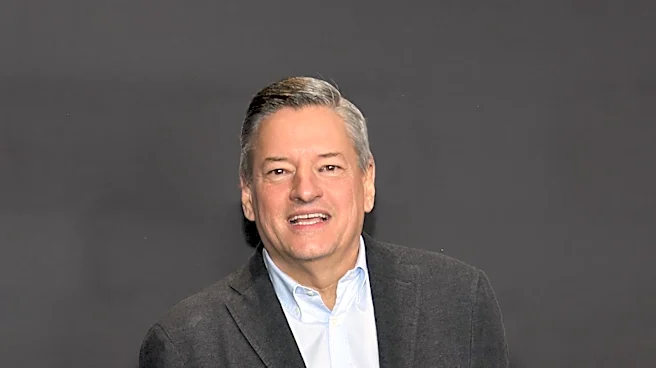







What's Happening?
Orangetheory Fitness has announced the appointment of Carl Loredo, formerly an executive at Pizza Hut, as its new global brand president. This move follows a trend in the wellness industry, where several fitness companies, including Crunch Fitness, VASA
FITNESS, Xponential Fitness, and CorePower Yoga, have also hired leaders from the restaurant sector this year. Loredo previously led Pizza Hut U.S. and spent nearly a decade at Wendy's. The industry's focus appears to be shifting towards consistency across numerous locations, building franchisee trust, and optimizing 'four-wall economics,' which refers to the profitability of individual store units. This strategic hiring suggests an emphasis on client experience and hospitality within the fitness sector, drawing on expertise from businesses known for managing extensive franchise networks and customer service.
Why It's Important?
The appointment of a seasoned restaurant executive like Carl Loredo to a top leadership position at Orangetheory Fitness highlights a significant strategic shift within the U.S. fitness industry. This trend indicates that fitness brands are increasingly prioritizing operational consistency, customer experience, and scalable business models, mirroring the successful strategies employed by large restaurant chains. For Orangetheory Fitness, Loredo's background in managing extensive franchise operations at Pizza Hut and Wendy's could be instrumental in standardizing service quality and operational efficiency across its global network. This approach aims to enhance member satisfaction and retention by ensuring a consistent, high-quality experience, which is crucial in a competitive market. The move also suggests that the fitness industry is maturing, with a greater focus on robust business practices and customer-centric approaches traditionally found in hospitality and retail sectors. This could lead to improved profitability for franchisees and a more predictable growth trajectory for the brand.
What's Next?
Following Carl Loredo's appointment, Orangetheory Fitness is likely to implement strategies focused on enhancing operational consistency and customer experience across its studios. This could involve standardizing training protocols for staff, refining customer service practices, and optimizing the economic performance of individual franchise locations. The company may leverage Loredo's extensive experience in managing large-scale franchise systems to streamline operations and foster stronger relationships with its franchisees. This strategic direction could also influence how Orangetheory Fitness approaches its global expansion, potentially adopting more structured and consistent growth models. Competitors in the fitness industry may observe these developments closely, potentially leading to similar executive hires from hospitality or retail sectors as they seek to emulate successful strategies for scaling and customer engagement. The focus on 'four-wall economics' suggests an emphasis on making each studio as profitable and efficient as possible, which could lead to new operational benchmarks within the industry.
Beyond the Headlines
The trend of fitness companies hiring executives from the restaurant industry, as exemplified by Orangetheory Fitness's appointment of Carl Loredo, points to a deeper evolution in how the wellness sector perceives its core business. Beyond just providing workouts, fitness brands are increasingly recognizing themselves as experience-driven service providers. This shift implies that the 'product' is not merely the exercise itself, but the entire customer journey, from booking a class to the in-studio experience and post-workout engagement. The expertise in managing customer flow, ensuring consistent service delivery, and building brand loyalty—hallmarks of the restaurant industry—are becoming critical for fitness chains. This could lead to a more professionalized and standardized fitness landscape, where the emphasis on hospitality and operational excellence rivals the focus on fitness methodology. It also raises questions about the balance between personalized, community-focused fitness and the efficiency-driven models of large franchises, potentially reshaping consumer expectations for their fitness providers.