






What's Happening?
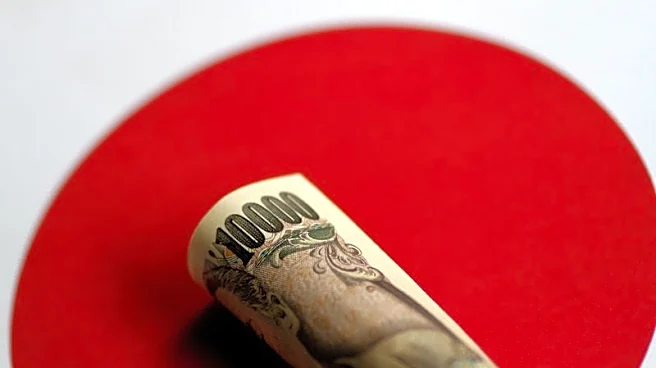
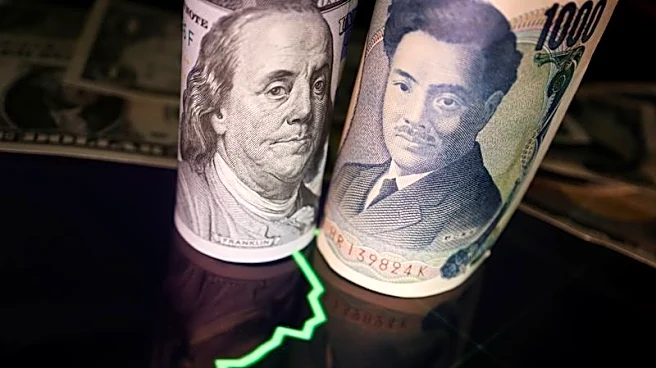
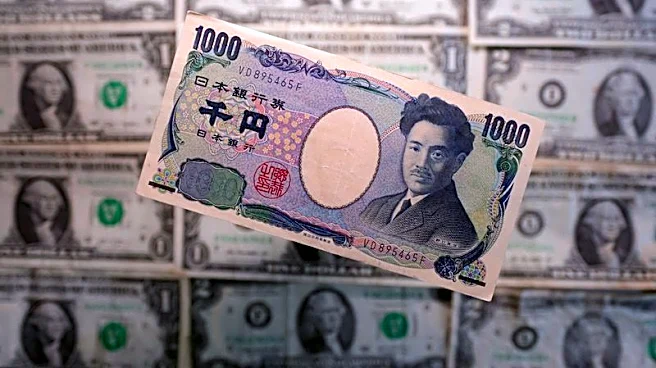
Japan and the United States have confirmed a joint intervention in currency markets to halt the yen's decline, marking the first such operation since 1998. The intervention was aimed at preventing excessive volatility in the yen and Japanese government
bond markets, which could have broader implications for the global financial system. The yen's weakness is attributed to Japan's lower interest rates compared to other major economies, reducing its appeal to investors. The Bank of Japan's recent interest rate hike to 1% still lags behind the U.S. Federal Reserve's rates, contributing to the yen's pressure.
Why It's Important?
The intervention underscores the critical role of currency stability in maintaining economic relationships and preventing financial market disruptions. For the U.S., ensuring a stable yen is vital to safeguarding its economic interests and trade agreements with Japan. The move also highlights concerns about the potential impact on U.S. borrowing costs, given Japan's significant holdings of U.S. Treasuries. The coordinated action reflects a commitment to preventing market volatility from affecting global financial stability, with potential implications for future monetary policy and international economic cooperation.
What's Next?
Both countries have indicated a willingness to intervene again if necessary, suggesting ongoing monitoring of the yen's performance. The potential for further interventions raises questions about the timing and coordination of such actions, especially in light of possible Federal Reserve rate hikes. Market participants will be watching for any shifts in U.S. monetary policy that could influence the yen and broader financial markets. The situation also highlights the importance of international cooperation in addressing currency volatility and its impact on global economic stability.