





What's Happening?
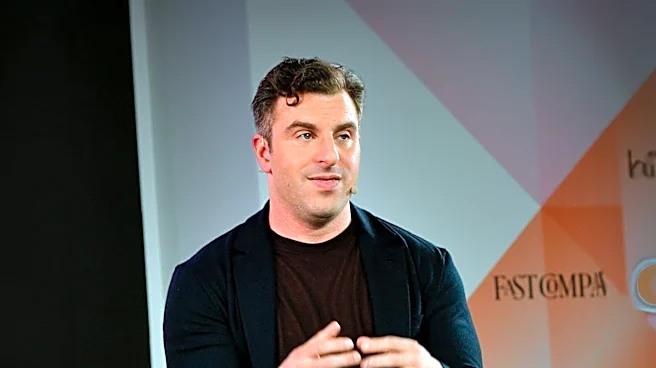
Airbnb CEO Brian Chesky faced significant challenges during the COVID-19 pandemic, which blindsided the company in the midst of its high-stakes efforts to go public. The global health crisis severely impacted the travel industry, directly affecting Airbnb's
core business model of short-term rentals. This period required rapid adaptation and strategic decision-making from Chesky and his team to navigate the unprecedented economic downturn. The situation highlighted the vulnerability of even well-established companies to unforeseen global events and the critical importance of resilience and agility in leadership during times of crisis. Despite the severe disruption, Airbnb ultimately proceeded with its public offering, demonstrating its ability to adapt and persevere through a challenging economic climate.
Why It's Important?
The experience of Airbnb and Brian Chesky during the pandemic offers a crucial case study for U.S. businesses on crisis management and market adaptation. The disruption to the travel sector had ripple effects across the U.S. economy, impacting hospitality, local businesses, and employment. Airbnb's ability to pivot and eventually go public despite these headwinds demonstrates the potential for innovation and strategic adjustments to overcome severe economic shocks. This event underscores the importance of robust financial planning and flexible business models for companies operating in dynamic global markets. For investors, it highlights the risks and opportunities associated with companies in sectors highly susceptible to external factors, influencing investment strategies and risk assessments in the U.S. financial landscape.
What's Next?
In the aftermath of the pandemic and its public offering, Airbnb is expected to continue refining its business model to enhance resilience against future disruptions. This may involve further diversification of services, increased focus on domestic travel, and enhanced safety protocols to reassure travelers. The company will likely invest in technology to optimize operations and adapt to changing consumer behaviors, such as the rise of remote work and longer-term stays. The broader travel industry in the U.S. will continue to learn from Airbnb's experience, potentially leading to more adaptive strategies and greater emphasis on crisis preparedness across the sector. Regulatory bodies may also consider new frameworks to support businesses during future crises, drawing lessons from the pandemic's economic impact.
Beyond the Headlines
The narrative of Airbnb's journey through the pandemic, particularly its public offering, delves into the broader theme of 'failure and fortune' in a crisis economy. It illustrates how some companies, despite initial setbacks, can leverage unique circumstances or inherent strengths to emerge stronger, while others falter. This raises questions about the nature of entrepreneurial resilience, the role of leadership in navigating extreme uncertainty, and the selective impact of economic crises on different market players. The story also touches upon the psychological toll on leaders like Chesky, who must make high-stakes decisions under immense pressure, shaping not only their companies' futures but also the livelihoods of thousands of employees and hosts. It underscores the unpredictable interplay between global events, corporate strategy, and individual leadership in shaping economic outcomes.