







What's Happening?
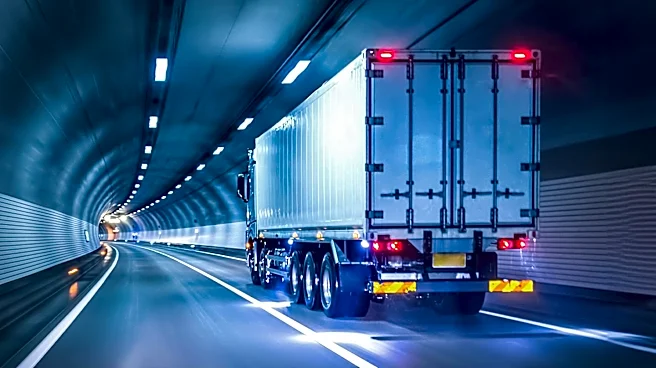
Walmart is leveraging artificial intelligence to improve the efficiency of its trucking operations, specifically focusing on reducing 'empty miles'—the distance trucks travel without carrying cargo. Leo Garcia, a regional load manager for Walmart, has
developed an AI tool using the company's in-house coding agent, Code Puppy. This tool analyzes available truckloads in a region and suggests optimal loads for drivers to pick up, based on factors like location and timing. The goal is to ensure that drivers can return home with a load, minimizing the time they spend on the road without cargo. Garcia's initiative is part of a broader trend within Walmart to utilize AI and data analysis to solve logistical challenges, ultimately aiming to enhance the work-life balance of truck drivers by getting them home more efficiently.
Why It's Important?
The implementation of AI in Walmart's logistics operations is significant as it addresses a common issue in the trucking industry: the inefficiency and cost associated with empty miles. By optimizing routes and ensuring trucks are loaded on return trips, Walmart can reduce operational costs and improve sustainability. This initiative also highlights the growing role of technology in transforming traditional industries, offering a competitive edge in logistics management. For truck drivers, this means potentially shorter and more predictable work schedules, improving their quality of life. As Walmart tests and potentially expands this AI tool, it could set a precedent for other companies in the logistics sector to adopt similar technologies, driving industry-wide improvements.
What's Next?
Walmart is currently testing Garcia's AI tool for broader use within the company. If successful, it could be distributed across Walmart's logistics operations, potentially leading to widespread adoption of AI-driven solutions in the trucking industry. This could prompt other major retailers and logistics companies to explore similar technologies to enhance efficiency and reduce costs. Additionally, as AI continues to prove its value in logistics, there may be increased investment in developing more sophisticated tools to tackle other challenges within the supply chain.