










What's Happening?
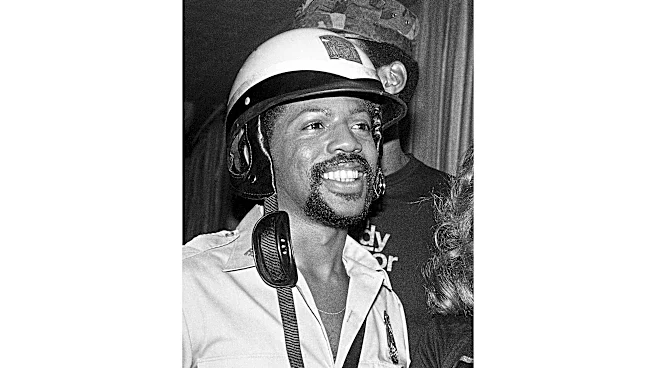
Victor Willis, the lead singer of the Village People, has passed away at the age of 74 following a short but aggressive illness. The announcement was made by the group, requesting privacy during this time. Willis was known for his role in creating iconic
disco hits such as 'Y.M.C.A.' and 'Macho Man,' which became anthems of the disco era. Despite the songs' association with gay culture, Willis had previously refuted claims that 'Y.M.C.A.' was a gay anthem, attributing such assumptions to the sexual orientation of some group members and the themes of their first album. Willis's career was marked by both success and personal struggles, including battles with drug use and legal issues. He left the Village People in 1980 but returned in later years, continuing to influence the music industry.
Why It's Important?
Victor Willis's death marks the end of an era for the disco genre, which he helped define through his work with the Village People. His contributions to music have left a lasting impact, with 'Y.M.C.A.' being preserved in the National Recording Registry for its cultural significance. Willis's complex relationship with President Trump, who used 'Y.M.C.A.' in his rallies, highlights the song's enduring popularity and its ability to transcend political and cultural boundaries. The music industry and fans alike mourn the loss of a figure who not only shaped the sound of a generation but also navigated the challenges of fame and personal adversity.
What's Next?
The music community is likely to pay tribute to Willis's legacy through various commemorations and celebrations of his work. The Village People may see a resurgence in interest as fans revisit their music in honor of Willis. Additionally, discussions around the cultural significance of disco music and its icons may be reignited, potentially influencing new generations of artists. The impact of Willis's death on the group's future activities and performances remains to be seen, as they navigate this significant loss.
Beyond the Headlines
Victor Willis's life story reflects broader themes of redemption and resilience. His struggles with substance abuse and legal issues, followed by his eventual recovery and return to music, offer a narrative of personal transformation. This aspect of his life may inspire discussions on the challenges faced by artists in the public eye and the importance of support systems in overcoming personal difficulties. Furthermore, Willis's legal battles for song ownership rights highlight ongoing issues in the music industry regarding artist compensation and intellectual property.