





What's Happening?
Newsmax has announced its acquisition of Radio Mambí (WAQI-AM 710) and WQBA-AM 1140, two Miami-based radio stations historically significant to the Cuban exile community. The reported combined purchase price for these stations is $1.8 million, as detailed
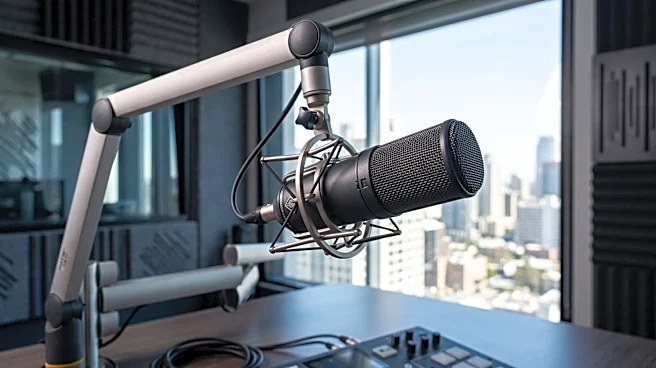
by industry publication Radio Ink. This transaction is currently awaiting approval from the Federal Communications Commission (FCC) and other regulatory conditions before it can be finalized. Newsmax is acquiring these frequencies from Latino Media Network (LMN), which had purchased them in 2022 but subsequently ceased their talk programming last year. The acquisition price is notably less than 3% of the $60 million LMN paid in 2022 for a package of 18 TelevisaUnivision stations, which included Radio Mambí and WQBA. Radio Mambí, established in 1985, was a prominent platform for conservative political discourse among exiles in Miami, known for its anti-Castro sentiment. Newsmax aims to restore Radio Mambí as a hub for Spanish-language news, opinion, talk shows, and community engagement, with plans for expanded local coverage and national digital distribution.
Why It's Important?
This acquisition is significant for the media landscape in South Florida and the broader U.S. Spanish-speaking market, particularly for conservative audiences. Radio Mambí has historically served as a critical voice for the Cuban exile community, and its revival under Newsmax signals a renewed focus on conservative Spanish-language programming. This move could influence political discourse and voter engagement, especially in a region with a large and politically active Latino population. The previous owner, LMN, had attempted to introduce more diverse and centrist programming, which ultimately did not materialize, leading to the cessation of talk shows and staff dismissals. Newsmax's commitment to restoring the station's original conservative focus could re-energize its traditional listenership and potentially attract new audiences seeking Spanish-language news and commentary aligned with conservative viewpoints. The acquisition also marks Newsmax's first venture into radio station ownership, expanding its media footprint beyond its existing television channel, Newsmax en Español, which utilizes artificial intelligence for real-time Spanish dubbing.
What's Next?
The acquisition is pending approval from the Federal Communications Commission (FCC) and other regulatory bodies. Once approved, Newsmax plans to restore Radio Mambí's programming to its historical format, focusing on news, opinion, talk shows, and community engagement in Spanish. The company intends to expand local coverage for Miami-Dade, Broward, and Monroe counties and implement national digital distribution through social media and podcasts. While a specific launch date and the names of new hosts have not yet been announced, the acquisition comes shortly after the November 3, 2026 elections, highlighting the political timing and potential impact of reinstating a strong conservative Spanish-language voice in South Florida. Republican Congressman Carlos Giménez has already praised the purchase, calling Radio Mambí a 'beacon of hope' for the Cuban exile community, indicating potential political support and engagement with the revived station.
Beyond the Headlines
The acquisition of Radio Mambí and WQBA by Newsmax has deeper implications for media diversity, political polarization, and the evolving role of ethnic media in the U.S. The return of a staunchly conservative voice to the airwaves in Miami could further solidify ideological divides within the Latino community, particularly among Cuban Americans, who have historically leaned conservative. This move also highlights the economic challenges faced by traditional radio stations and the strategic importance of niche markets for media companies. Newsmax's expansion into radio, coupled with its existing AI-dubbed Spanish television channel, suggests a broader strategy to capture and influence Spanish-speaking audiences across various platforms. This trend could lead to increased competition for Latino listenership and viewership, potentially shaping future political narratives and cultural discussions within these communities. The shift from LMN's 'Democratic and centrist' vision back to a conservative focus also underscores the complexities of media ownership and its impact on editorial direction and community representation.