




What's Happening?
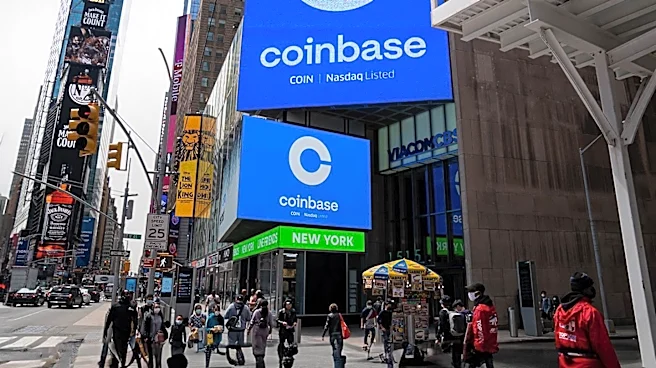
Coinbase Global is deepening its role as a foundational infrastructure provider in the cryptocurrency ecosystem. This expansion is highlighted by Wirex's recent launch of tokenized US equities built on Coinbase's Base network. In this arrangement, Coinbase is responsible
for issuing the tokens and providing the underlying on-chain infrastructure for partners like Wirex One, which serves nearly 2 million users. This move signifies a strategic shift for Coinbase beyond being solely a trading venue, positioning it as a critical 'crypto plumbing' service for third parties. Concurrently, a federal judge's dismissal of the TerraUSD class action lawsuit has removed a legal overhang for Coinbase, potentially allowing the company to focus more on these infrastructure developments. While the dismissal addresses a legal concern, the company still faces margin pressure, with its latest quarter showing a 2.5% operating margin and strain on spot trading volumes. The company's investment narrative, as described by Simply Wall St Community investor QuanD, frames Coinbase as a leveraged bet on long-term crypto adoption, with increasing importance placed on custody, subscriptions, and prediction markets alongside traditional trading activity.
Why It's Important?
This development is significant because it illustrates Coinbase's evolving business model and its ambition to become a central player in the broader tokenization of assets. By providing the infrastructure for tokenized US equities, Coinbase is tapping into a potentially massive market that extends beyond traditional cryptocurrency trading. This strategy could diversify its revenue streams, making the company less reliant on volatile spot trading volumes and asset values. For the U.S. financial industry, the tokenization of equities on blockchain networks like Base could represent a foundational shift in how securities are issued, traded, and settled, potentially increasing efficiency and accessibility. This move also signals growing institutional confidence in blockchain technology for mainstream financial products. The success of such partnerships will be crucial for Coinbase to solidify its position as an essential infrastructure provider, attracting more third-party developers and financial institutions to build on its platform. Investors will be closely watching the execution of these use cases and how Coinbase manages competition in areas like perpetual futures and ongoing security demands.
What's Next?
The immediate next steps for Coinbase involve the effective execution and deepening of partnerships like the one with Wirex, as well as potential collaborations with other entities such as Supertake and Q.security. These partnerships are key to validating Coinbase's strategy of becoming a core infrastructure provider rather than just a trading platform. The company will need to demonstrate its ability to manage risks associated with increased competition in perpetual futures and maintain robust security for its expanding on-chain services. Analysts are closely monitoring Coinbase's tokenization and Base businesses as potential significant growth drivers. Bullish forecasts already project substantial revenue and earnings by 2029, and the success of initiatives like tokenized equities could further influence these expectations. The company's ability to improve its operating margins and reduce reliance on Bitcoin gains will also be critical for its short-term profitability and long-term valuation. Investors will be looking for further announcements regarding new partnerships and the expansion of services built on the Base network.
Beyond the Headlines
Beyond the immediate financial implications, Coinbase's push into providing on-chain infrastructure for tokenized equities raises broader questions about the future of traditional finance and the regulatory landscape. The tokenization of real-world assets, particularly equities, blurs the lines between traditional securities markets and decentralized finance. This could lead to increased scrutiny from financial regulators regarding investor protection, market integrity, and systemic risk. The legal frameworks surrounding tokenized securities are still evolving, and Coinbase's role as an issuer and infrastructure provider could place it at the forefront of these regulatory discussions. Furthermore, the success of tokenized equities on blockchain networks could democratize access to financial markets, potentially lowering barriers to entry for investors globally. This shift could also challenge existing financial intermediaries and market structures, prompting a re-evaluation of how value is transferred and owned in the digital age. The ethical implications of programmable money and assets, including issues of censorship resistance and control, will also become more prominent as these technologies mature.