


What's Happening?
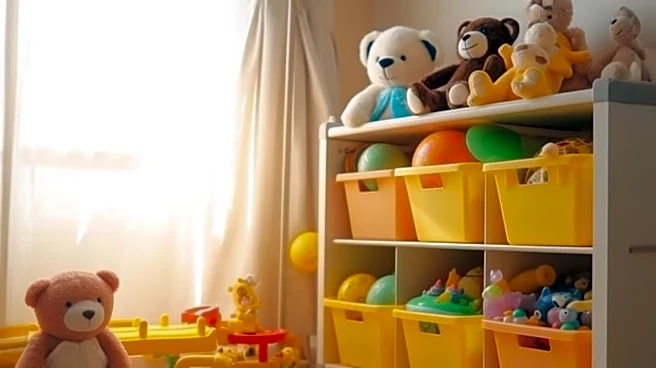
IKEA TROFAST storage units are being highlighted as effective solutions for organizing small playrooms and maximizing space. These units, characterized by their low-level storage and removable tubs, are particularly useful in compact children's areas
such as living room corners, small bedrooms, or spaces under stairs. Strategies include using TROFAST tubs for toy rotation, where a smaller selection of toys is accessible while others are stored and swapped periodically. This approach helps children rediscover toys and reduces clutter. Additionally, TROFAST units can be strategically placed in awkward corners, under windows, or beneath sloping ceilings to utilize otherwise unused space. Creating dedicated art and craft stations with separate tubs for supplies, and organizing toys by category with picture labels, are also recommended to promote independent play and easier tidying for children.
Why It's Important?
The effective organization of children's play spaces has significant implications for household functionality and child development. In smaller living environments, maximizing space through solutions like IKEA TROFAST units can prevent clutter, reduce stress for parents, and create a more harmonious home atmosphere. For children, a well-organized play area fosters independence by allowing them to easily access and put away their toys, promoting responsibility and self-sufficiency. The concept of toy rotation, facilitated by these storage units, can also enhance a child's engagement with their toys, encouraging creativity and reducing the feeling of being overwhelmed by too many options. Furthermore, by integrating storage into the room's design and using visual cues like picture labels, these solutions support early learning and cognitive development, making tidying a more manageable and even enjoyable part of a child's routine.
What's Next?
As awareness of space-saving and organizational hacks grows, particularly for families in urban or smaller living situations, the demand for versatile furniture solutions like IKEA TROFAST is likely to continue. Consumers may increasingly seek out innovative ways to adapt existing furniture or invest in modular systems that can serve multiple purposes. The trend towards creating 'activity zones' within limited spaces suggests a future where furniture design prioritizes flexibility and functionality. Manufacturers and retailers might respond by offering more customizable storage options, accessories that enhance organization (like decorative stickers for tubs), and educational resources on how to best utilize their products for child development and home organization. The emphasis will remain on creating calm, functional, and aesthetically pleasing environments that support both children's play and overall family well-being.
Beyond the Headlines
The focus on small space hacks for playrooms reflects a broader societal shift towards more mindful consumption and efficient living, especially in areas with high population density and smaller homes. This trend extends beyond mere organization; it touches upon pedagogical approaches that advocate for less clutter and more intentional play. By limiting the number of toys available at one time through rotation, parents can encourage deeper engagement with each item, fostering creativity and problem-solving skills rather than superficial interaction with a vast array of toys. The integration of storage solutions that blend with home aesthetics also highlights a desire for children's spaces to be cohesive with the overall home design, moving away from brightly colored, overtly 'childish' furniture towards more integrated and sophisticated solutions. This reflects a growing appreciation for design that serves both practical and aesthetic purposes in family living.