








What's Happening?
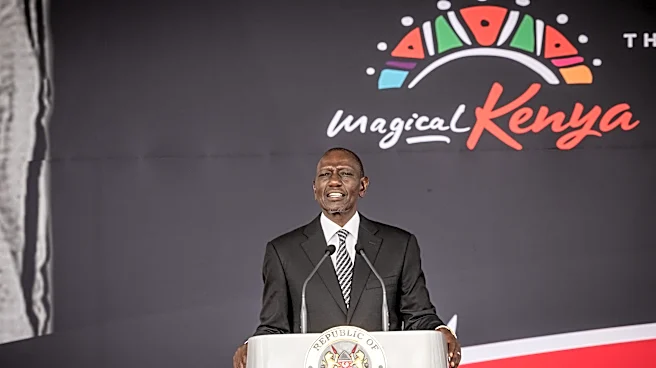
The Global Investors for Sustainable Development (GISD) Alliance is set to convene an in-country Investment Roundtable in Nairobi, Kenya, from December 1-2, 2026. This event will gather senior government officials, global and domestic investors, multilateral
development banks (MDBs), and development finance partners. The primary objective is to advance concrete investment opportunities in infrastructure and clean energy within Kenya. The roundtable will also highlight best practices in innovative financing and risk-sharing mechanisms from the region and foster dialogue on policy recommendations to enhance Kenya's investment climate, particularly in support of its energy transition and sustainable development goals. Kenya was chosen as a pilot country for this initiative, building on the outcomes of the 2025 Fourth International Conference on Financing for Development (FFD4) in Sevilla, Spain. The country is recognized for its compelling investment landscape in Africa, with 90% of its energy grid powered by renewables, expanding infrastructure pipelines, and a strong government commitment to public-private partnerships.
Why It's Important?
This GISD Investment Roundtable is crucial for accelerating private capital mobilization in Kenya, especially in critical sectors like infrastructure and clean energy. By bringing together a diverse group of stakeholders, including investors, policymakers, and financial institutions, the event aims to address significant barriers to scaling up private investment, such as the high cost of capital, limited project preparation capacity, lack of transparency, and currency risks. The focus on Kenya's National Energy Compact and Mission 300 initiative underscores the country's commitment to achieving universal access to affordable, reliable, sustainable, and modern energy. Successful outcomes from this roundtable could serve as a model for other developing nations seeking to attract private finance for sustainable development, demonstrating how targeted dialogues and policy reforms can unlock substantial investment flows. The involvement of various international and local financial entities, including Moody's, PIMCO, Allianz, and the Nairobi Securities Exchange, highlights the global interest in Kenya's economic potential and its role in regional development.
What's Next?
Following the December 2026 roundtable, agreed actions and next steps for 2027 will be outlined, focusing on enhancing Kenya's investment climate. The event is expected to facilitate ongoing dialogue between public and private actors, update investors on policy developments, and showcase key investment opportunities. The discussions will also aim to develop and validate policy recommendations to improve the enabling environment for private investment in Kenya. The involvement of organizations like the Ministry of Energy and Petroleum, the Government of Sweden, and the United Nations in Kenya suggests a concerted effort to implement the outcomes. Future engagements may include continued monitoring of investment project pipelines under the National Energy Compact and further collaboration to address identified barriers to private capital mobilization. The insights gained from this roundtable could also inform GISD's broader strategies for expanding its work to other countries, potentially leading to similar initiatives in Colombia and Indonesia.
Beyond the Headlines
The GISD Investment Roundtable in Kenya represents a broader global effort to channel private finance towards sustainable development goals, particularly in emerging markets. The emphasis on innovative financing and risk-sharing mechanisms reflects a growing recognition that traditional public funding alone is insufficient to meet the vast investment needs for infrastructure and clean energy transitions. This initiative highlights the evolving role of multilateral development banks and development finance institutions in de-risking investments and creating attractive environments for private capital. Furthermore, the focus on policy recommendations underscores the critical link between a supportive regulatory framework and successful private sector engagement. The long-term implications could include a shift in how development finance is structured, with greater emphasis on public-private partnerships and blended finance solutions. This approach could not only accelerate economic growth and sustainable development in countries like Kenya but also foster greater financial inclusion and resilience against global economic shocks.