





What's Happening?
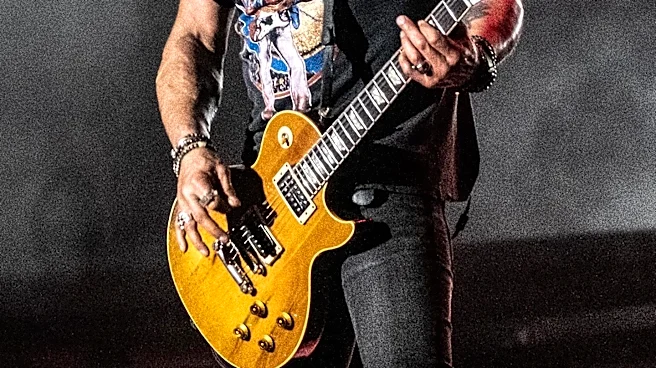
Slash, the renowned guitarist from Guns N' Roses, has lauded Metallica's 'The Black Album' as a pinnacle of metal music. He described any Metallica album as a 'given for a hard rock/metal record collection,' calling them 'the pinnacle of that style of music.'
Slash specifically highlighted 'The Black Album' for its ability to cross over and make Metallica a household name, while still maintaining their heavy sound. He noted that while fans were initially upset by the band's move towards a more radio-friendly sound, he appreciated the album's all-killer, no-filler approach, especially as Guns N' Roses was releasing their own extensive 'Use Your Illusion' double album at the time. Metallica, who had moved to San Francisco in the early 1980s to avoid the glam aesthetic of the Los Angeles scene, became a major force in underground metal before 'The Black Album' brought them mainstream success.
Why It's Important?
Slash's endorsement of 'The Black Album' is significant because it comes from a highly respected figure in hard rock, offering a peer's perspective on a pivotal moment in metal history. 'The Black Album' represented a commercial breakthrough for Metallica, broadening their appeal beyond the thrash metal subgenre. This album's success demonstrated that a metal band could achieve mainstream popularity without entirely compromising its core sound, influencing countless bands and reshaping perceptions of the genre. Slash's comments underscore the album's impact on the music industry, proving that accessibility and heaviness were not mutually exclusive. It also highlights a shared experience among rock bands of that era: navigating the balance between artistic integrity and commercial success, and the potential backlash from purist fans when a band evolves its sound.
What's Next?
The legacy of 'The Black Album' continues to be debated and celebrated within the music community. Slash's recent comments contribute to the ongoing discussion about the album's place in rock history and its influence on subsequent generations of musicians. This kind of retrospective praise from influential artists often encourages new listeners to discover classic albums and re-evaluate their impact. For Metallica, 'The Black Album' remains a cornerstone of their discography, frequently featured in their live performances and continuing to sell millions of copies worldwide. The album's enduring popularity and critical re-evaluation by peers like Slash ensure its continued relevance in the narrative of heavy metal and mainstream rock music.
Beyond the Headlines
Beyond its commercial success, 'The Black Album' sparked a crucial conversation within the metal community about authenticity versus evolution. Many long-time fans felt betrayed by Metallica's shift, viewing it as a 'sell-out.' However, Slash's perspective, as someone who also achieved massive mainstream success with Guns N' Roses, offers a counter-narrative: that artistic growth and broader appeal don't necessarily equate to a loss of integrity. This debate reflects a broader cultural tension in music genres, where subcultures often grapple with the commercialization of their art. 'The Black Album' proved that a band could strip away some complexity and speed, yet gain a more impactful, powerful sound, demonstrating that 'heavy' can manifest in various forms. This album's journey from fan controversy to critical acclaim and widespread acceptance serves as a case study in the dynamics of musical innovation, audience reception, and the subjective nature of artistic 'purity.'