





What's Happening?
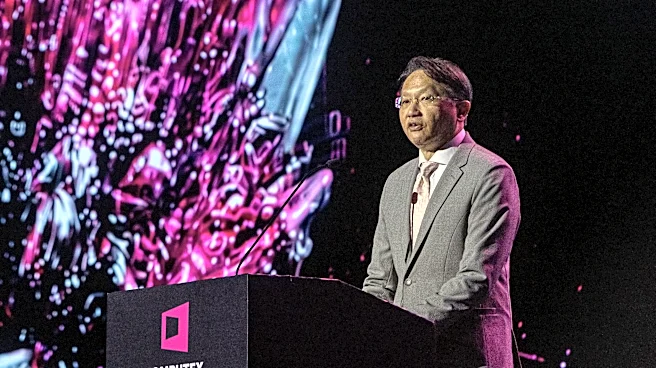
NVIDIA Vice President Rev Lebaredian met with Armenian Prime Minister Nikol Pashinyan at DigiTec 2026 in Yerevan to discuss Armenia's potential to become a global hub for artificial intelligence (AI). The discussion, titled 'Armenia’s Opportunities in Artificial
Intelligence: From Vision to Action,' focused on strategies to expand AI infrastructure, attract international investment, and solidify Armenia's standing in the global technology sector. Prime Minister Pashinyan highlighted that AI investments could boost tax revenues, create jobs, and support public services, including healthcare. He emphasized that the government's goal is to enhance productivity through AI, not to replace human workers. Lebaredian praised Armenia's technological advancements, noting its lead over regional neighbors in AI and IT development. He stated that Armenia possesses exceptional AI computing capacity relative to its population, positioning it uniquely in the emerging global technology economy. The conversation also touched upon Armenia's 'Crossroads of Peace' initiative, linking digital connectivity and AI services to regional and international infrastructure networks, and the country's progress in renewable energy to meet the demands of AI facilities.
Why It's Important?
This discussion underscores Armenia's strategic pivot towards becoming a significant player in the global AI landscape, a move that could have substantial economic and geopolitical implications. For Armenia, attracting international investment in AI infrastructure, estimated by Lebaredian to reach $3 trillion to $4 trillion globally in the coming years, could stimulate technological innovation, create high-paying jobs, and expand digital service exports. This could also deepen economic ties with the United States and Europe, enhancing Armenia's international standing and security. The emphasis on AI as a tool for productivity improvement in public administration reflects a broader global trend of governments leveraging technology for efficiency. Furthermore, Armenia's focus on renewable energy to power AI facilities highlights a growing awareness of the energy demands of advanced computing and positions the country as a potential leader in sustainable technological development. Its relative advantage in AI computing capacity per capita could allow it to compete effectively in a rapidly evolving global tech economy.
What's Next?
Following this high-level discussion, Armenia is likely to intensify its efforts to attract foreign direct investment into its AI sector. This could involve developing more targeted incentives for technology companies, fostering a skilled workforce through educational programs, and enhancing its digital infrastructure. The government may also explore further partnerships with global technology leaders like NVIDIA to leverage their expertise and resources. Continued focus on renewable energy expansion will be crucial to support the energy-intensive AI infrastructure, potentially leading to investments in advanced energy storage solutions. Internationally, Armenia may seek to promote its 'Crossroads of Peace' initiative by highlighting its digital connectivity and AI service capabilities as integral components of regional infrastructure networks. The country's progress in these areas will be closely watched by international investors and technology firms looking for emerging AI hubs.
Beyond the Headlines
The ambition for Armenia to become a global AI hub extends beyond immediate economic benefits, touching upon deeper aspects of national development and international relations. By positioning itself as a key player in AI, Armenia aims to enhance its long-term prosperity, security, and international standing, becoming a valuable partner in the global technology ecosystem. This strategy could foster a knowledge-based economy, reducing reliance on traditional industries and creating a more resilient economic future. Ethically, the government's stated goal of using AI to improve productivity rather than replace workers suggests a cautious approach to technological integration, aiming for human-centric AI development. Culturally, a thriving AI sector could attract global talent, fostering a more diverse and innovative society. Legally, the development of advanced AI infrastructure will necessitate robust regulatory frameworks to address data privacy, intellectual property, and ethical AI use, potentially positioning Armenia as a leader in responsible AI governance.