



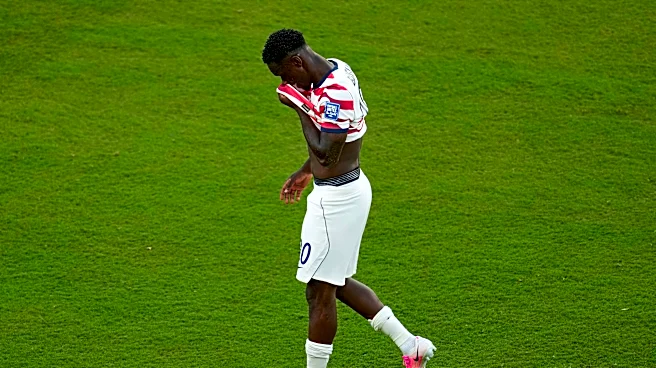


What's Happening?
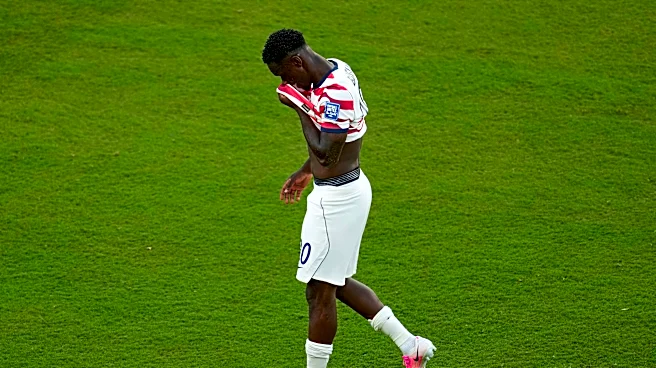
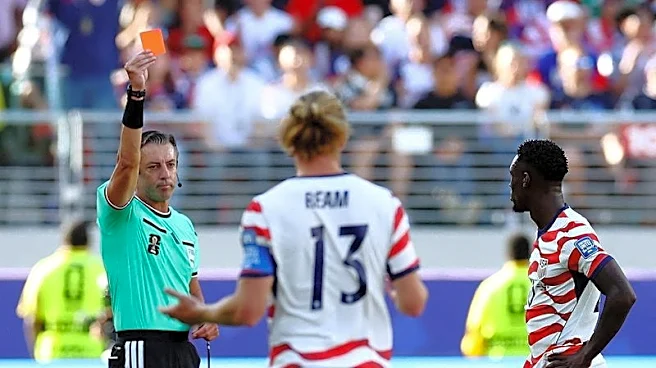
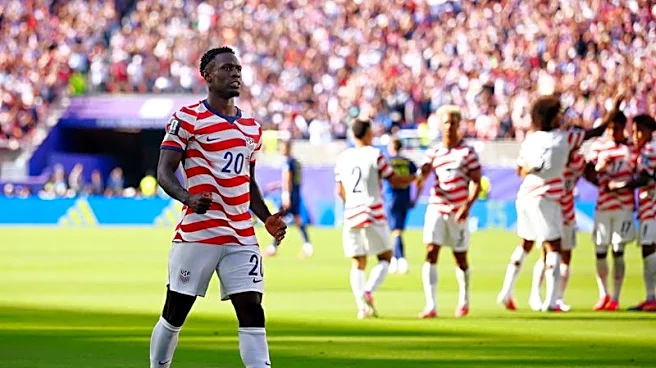
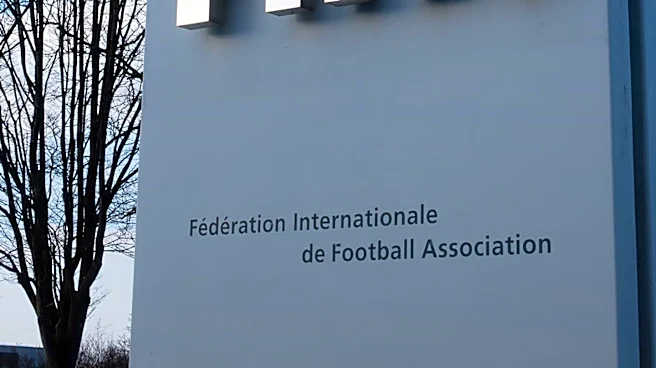
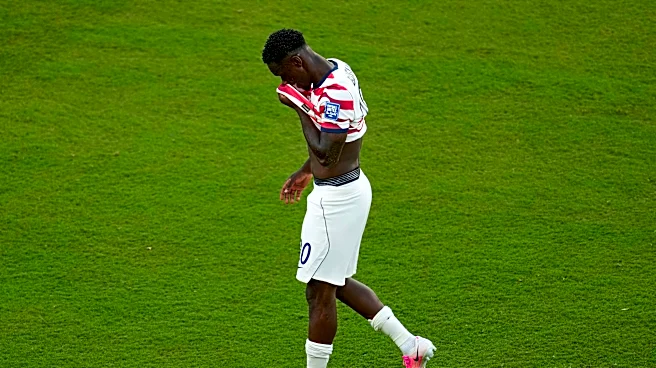
UEFA has expressed strong disapproval of FIFA's decision to lift the suspension of USA striker Folarin Balogun during the World Cup. The Union of European Football Associations (UEFA) argues that this move undermines the integrity of the game and the credibility
of the competition. The suspension was initially imposed following a red card, which is a mandatory rule that UEFA insists cannot be lifted mid-tournament. This decision by FIFA has been described by UEFA as unprecedented, incomprehensible, and unjustifiable. The controversy has heightened tensions between UEFA and FIFA, with UEFA President Aleksander Ceferin accusing FIFA of crossing a 'red line'. The decision has sparked a potential legal challenge from the Royal Belgian Football Association, which is considering taking the matter to the Court of Arbitration for Sport.
Why It's Important?
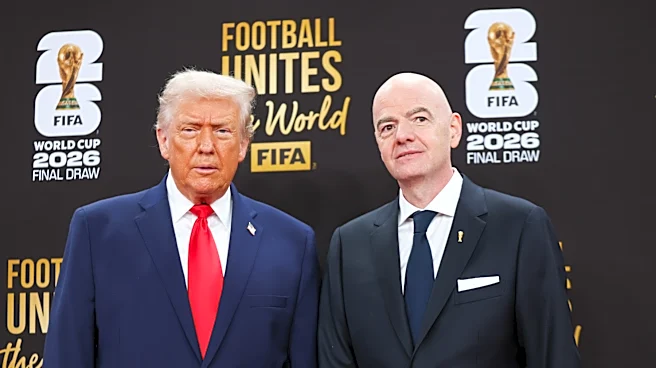
The decision by FIFA to lift Balogun's suspension has significant implications for the governance of international football. It highlights the ongoing power struggle between FIFA and UEFA, two of the most influential bodies in the sport. UEFA's criticism underscores concerns about the consistency and fairness of FIFA's disciplinary processes. The move could set a precedent for future competitions, potentially affecting how rules are enforced and interpreted. This situation also reflects broader tensions over FIFA's management of the World Cup and its ambitions to expand the Club World Cup, which UEFA views as a threat to the Champions League's dominance. The outcome of this dispute could influence future negotiations over the global football calendar and the balance of power within the sport.
What's Next?
The next steps in this dispute are uncertain, but they could involve legal action. The Royal Belgian Football Association is exploring legal options, including taking FIFA to the Court of Arbitration for Sport. UEFA may support this action, leveraging its expertise in Swiss law to challenge FIFA's decision. Additionally, UEFA could use this situation to influence upcoming negotiations over the global football calendar post-2030. The controversy may also impact the scheduling of the 2034 World Cup in Saudi Arabia, with UEFA potentially leading a protest involving European national associations, domestic leagues, and player unions. These developments could reshape the governance and structure of international football competitions.