




What's Happening?
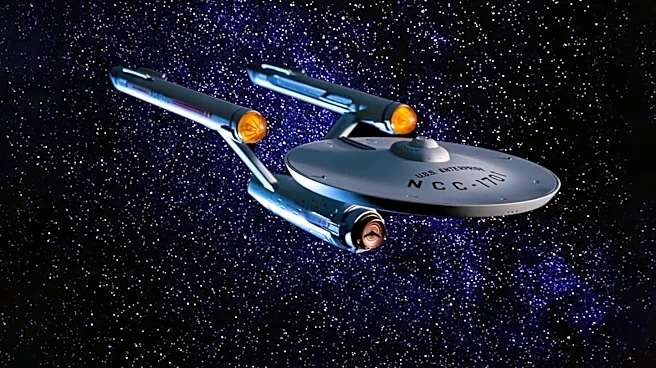
The 'Off-Hour' episode of 'Star Trek: Strange New Worlds' adopted a real-time format, similar to the series '24', to intensify the narrative tension. Writer Bill Wolkoff pitched the concept as 'The Poseidon Adventure in space,' focusing on a shipboard
crisis caused by a dangerous space anomaly. The episode prominently features Nurse Christine Chapel (Jess Bush) and Dr. M'Benga (Babs Olusanmokun) facing life-threatening situations, with M'Benga pinned by a lab table. Co-showrunner Akiva Goldsman challenged Wolkoff to make audiences believe M'Benga could die, despite the typical survival of main characters in the franchise. The scientific basis for the anomaly, a slipstream wormhole created by a collapsing neutrino star, was inspired by the Deep Underground Neutrino Experiment (D.U.N.E.) and Randall Monroe's book 'What If,' which explores lethal neutrino radiation scenarios. The episode also incorporated practical effects, such as Chapel losing a finger, and an improvised comedic moment from actor Martin Quinn as Scotty.
Why It's Important?
This creative decision to employ a real-time narrative and heighten character peril in 'Star Trek: Strange New Worlds' is significant for the entertainment industry, particularly for long-running franchises. By breaking from conventional storytelling where main characters are often perceived as invulnerable, the show aims to re-engage audiences and elevate emotional investment. This approach can serve as a case study for other series looking to innovate within established universes, demonstrating how to introduce genuine stakes and unpredictability. The integration of real-world scientific concepts, even if fictionalized, also highlights a trend in science fiction to ground fantastical elements in plausible, albeit extreme, scientific theories, potentially inspiring viewer interest in STEM fields. Furthermore, the emphasis on practical effects and actor improvisation underscores the value of traditional filmmaking techniques and on-set creativity in enhancing narrative authenticity and audience engagement.
What's Next?
The success of 'Off-Hour' in generating heightened tension and audience engagement may influence future storytelling decisions within 'Star Trek: Strange New Worlds' and potentially other Paramount+ productions. The showrunners might explore more episodes utilizing real-time formats or similar high-stakes scenarios to maintain narrative freshness. The positive reception of the episode's blend of scientific inspiration, character-driven drama, and comedic relief could also encourage other science fiction series to experiment with diverse narrative structures and thematic elements. Viewers can anticipate continued exploration of complex character dynamics and challenging situations for the Enterprise crew, as the series seeks to push boundaries while remaining true to the 'Star Trek' ethos. The show's commitment to both dramatic intensity and scientific grounding suggests a continued evolution in its approach to episodic storytelling.
Beyond the Headlines
The episode's exploration of mortality and the five stages of grief through Dr. M'Benga's near-death experience delves into profound psychological themes rarely addressed with such intensity in 'Star Trek.' This approach challenges the traditional optimistic view of Starfleet personnel as always overcoming adversity with minimal personal cost, introducing a more human and vulnerable dimension to the characters. The inspiration drawn from the 'Homicide' episode 'Subway,' which depicted a character's slow realization of impending death, suggests a deliberate effort to infuse the science fiction narrative with raw, emotional realism. This could lead to a broader shift in how character arcs are developed in the franchise, allowing for more exploration of trauma, loss, and the psychological toll of space exploration. The episode also subtly critiques the notion of infallibility within highly skilled teams, demonstrating that even the 'cream of the crop' can be overwhelmed by unforeseen obstacles, adding a layer of humility and realism to the idealized Starfleet image.