


What's Happening?
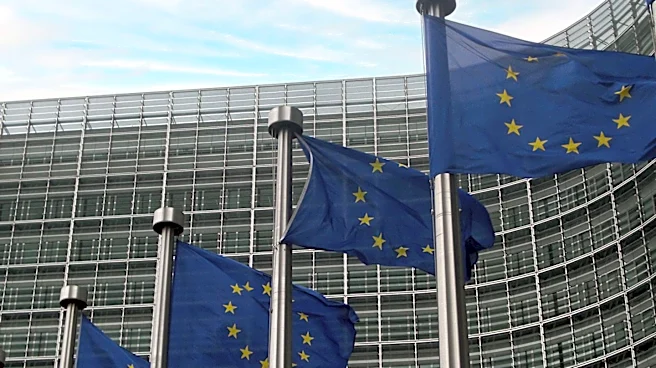
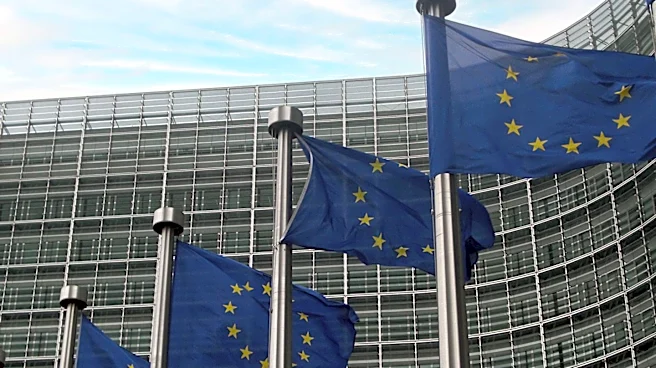
The World Trade Organization's (WTO) dispute settlement body has agreed to establish a panel to examine a challenge brought by the Russian Federation against the European Union's Carbon Border Adjustment Mechanism (CBAM). This mechanism imposes a carbon
charge on certain imports to the EU, designed to equalize the carbon costs faced by European producers. The EU has expressed strong objections to Russia's request, citing Russia's ongoing war of aggression against Ukraine and questioning the legitimacy and good faith of Russia's actions within the WTO framework. Despite its objections, the EU stated it would participate in the panel proceedings to ensure an objective assessment of the matter and to defend its measures, emphasizing its commitment to the rules-based multilateral trading system. The EU has also effectively suspended its concessions and obligations with respect to Russia under WTO rules due to the conflict.
Why It's Important?
This development is significant for U.S. industries and global trade policy as it sets a precedent for how carbon border adjustments, increasingly considered by various nations including the U.S., will be scrutinized under international trade law. If the WTO panel finds the EU's CBAM to be inconsistent with WTO agreements, it could influence the design and implementation of similar climate-related trade measures worldwide, potentially impacting the competitiveness of U.S. exports and imports. For U.S. businesses, particularly those in carbon-intensive sectors, the outcome could dictate future compliance costs and market access strategies. Furthermore, the case highlights the ongoing tension between environmental policy objectives and established trade rules, and the challenges of maintaining a functional dispute settlement system within the WTO amidst geopolitical conflicts. The EU's stance on Russia's participation also underscores the broader implications of international conflicts on global economic governance.
What's Next?
The newly established WTO panel will now proceed with examining Russia's challenge against the EU's Carbon Border Adjustment Mechanism. The EU has indicated its intention to participate in these proceedings, focusing on defending the WTO-compatibility of its CBAM and ensuring an objective assessment. However, the EU will engage only with the panel and not directly with the Russian Federation, underscoring the strained diplomatic relations. The panel's findings will be crucial, as they could lead to recommendations for the EU to modify its CBAM or could affirm its compliance with WTO rules. The timeline for such a dispute resolution process can be extensive, involving submissions from both parties, hearings, and the drafting of a report. The outcome will likely influence other countries considering similar carbon pricing mechanisms and will be closely watched by international trade and environmental policy circles.
Beyond the Headlines
This dispute delves into the complex intersection of climate policy, international trade law, and geopolitical tensions. The EU's CBAM is a pioneering effort to address carbon leakage and incentivize global decarbonization, but its compatibility with WTO principles, particularly non-discrimination and national treatment, is now under formal challenge. The case raises fundamental questions about the extent to which environmental protection measures can legitimately impact trade flows and whether existing WTO rules are adequate to address contemporary global challenges like climate change. The EU's strong objection to Russia's standing in the dispute, given the ongoing conflict in Ukraine, also highlights the ethical and political dimensions that increasingly permeate international economic forums. The outcome could either legitimize carbon border adjustments as a tool for climate action or necessitate significant revisions to their design, potentially shaping the future of green trade policies globally.