



What's Happening?
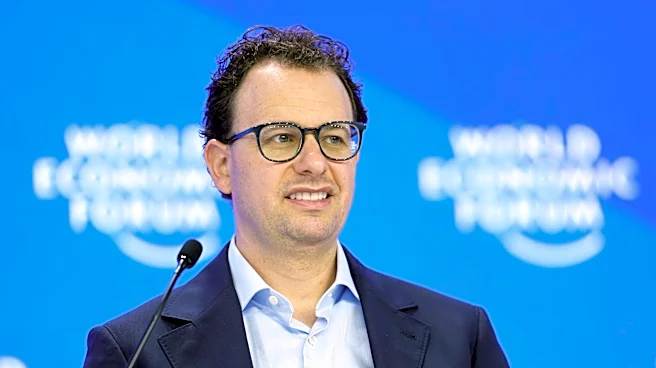
NVIDIA CEO Jensen Huang recently stated that artificial intelligence safety is an engineering problem, not a legal one, and that existing market forces are sufficient to ensure companies release safe AI products. Speaking at Salesforce's Dreamforce conference,
Huang argued against the necessity of new laws or regulations for AI. He emphasized that AI systems, despite their complexity, are ultimately computing systems built by humans and can therefore be controlled by humans. Huang believes that if companies are not confident in the functionality, capability, or safety of their AI products, they should not release them. He suggested that the market will naturally pressure companies to prioritize safety, allowing for both innovation and safe products simultaneously. This perspective comes as NVIDIA continues to experience significant growth in the AI sector, with Huang noting an acceleration in AI computing demand and a substantial increase in token generation.
Why It's Important?
Jensen Huang's stance on AI regulation is significant because NVIDIA is a dominant player in the AI hardware and software market. His views could influence the ongoing global debate about how to govern AI development and deployment. If his perspective gains traction, it could lead to a less regulated environment for AI innovation in the U.S., potentially fostering rapid technological advancement but also raising concerns among those who advocate for stricter oversight to prevent misuse or unintended consequences. A lack of new regulations, as advocated by Huang, could benefit companies like NVIDIA by reducing compliance burdens and accelerating product development cycles. Conversely, it might exacerbate fears about AI's societal impact, particularly regarding ethical considerations, job displacement, and the potential for autonomous systems to operate without sufficient human accountability. The debate over AI regulation has broad implications for national security, economic competitiveness, and the future of work.
What's Next?
The discussion around AI regulation is expected to continue, with industry leaders like Jensen Huang advocating for self-governance and market-driven safety measures, while policymakers and other stakeholders may push for more formal regulatory frameworks. The U.S. government and international bodies are actively exploring various approaches to AI governance, ranging from voluntary guidelines to mandatory regulations. Future developments may include legislative proposals, industry-led initiatives for ethical AI development, and ongoing public discourse about the balance between innovation and safety. Companies in the AI sector will likely face increasing scrutiny regarding their safety protocols and ethical considerations, regardless of whether new regulations are enacted. The trajectory of AI development and its integration into various sectors will largely depend on how these differing viewpoints on regulation are reconciled.
Beyond the Headlines
Beyond the immediate debate on regulation, Huang's comments highlight a deeper philosophical question about the nature of AI and human control. By characterizing AI as merely a 'complicated computing system,' he downplays the 'alien mind' concerns raised by some AI safety researchers, suggesting a more pragmatic, engineering-focused approach. This perspective could shape how society perceives AI—as a tool to be managed and optimized rather than a potentially autonomous entity requiring stringent external control. The long-term implications of this viewpoint could include a greater emphasis on technical solutions for AI safety, such as robust testing environments and built-in guardrails, rather than broad legislative mandates. However, it also raises ethical questions about corporate responsibility in developing powerful technologies and the potential for market forces alone to adequately address complex societal risks. The ongoing evolution of AI will likely test the efficacy of both market-driven and regulatory approaches to ensure its safe and beneficial integration into human society.