






What's Happening?
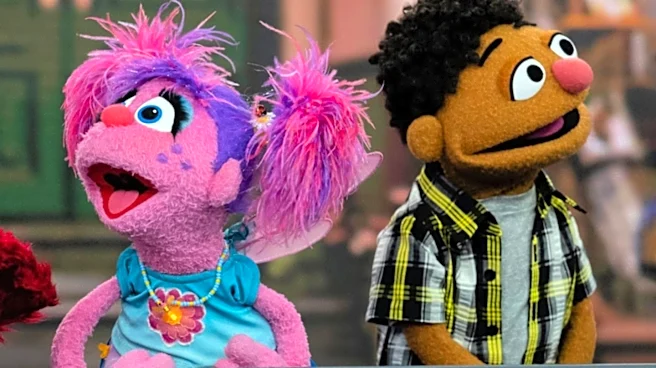
Sesame Street has released a new parody song titled 'Got to Go,' which reimagines Chappell Roan's hit single 'Hot to Go!' The educational video features Cookie Monster, Elmo, and Abby Cadabby, with Cookie Monster leading the performance in a sparkly blue
outfit. The lyrics of the original song have been replaced with simple, child-friendly reminders about recognizing the need to use the bathroom and the process of potty training. The characters also spell out 'P-O-T-T-Y' during the song to reinforce the message. This initiative is part of Sesame Street's 'Parody Party' collection, which adapts popular music to teach children various life lessons. Other songs in this collection address themes such as sharing, teamwork, recycling, self-control, and daily routines, continuing the show's long-standing tradition of using music and comedy for early childhood education.
Why It's Important?
This development is important as it highlights the continued relevance and innovative approach of educational programming like Sesame Street in engaging young audiences. By leveraging contemporary pop culture, specifically a popular song by Chappell Roan, Sesame Street can capture children's attention more effectively and make learning basic life skills, such as potty training, more enjoyable and memorable. This strategy helps bridge the gap between entertainment and education, ensuring that essential developmental milestones are addressed in an accessible and engaging manner. For parents and educators, it provides a fun and relatable tool to introduce and reinforce crucial routines, potentially easing the challenges often associated with early childhood development. The use of popular music also demonstrates the show's adaptability and commitment to staying current with cultural trends to maximize its impact on children's learning.
What's Next?
Following the release of 'Got to Go,' Sesame Street is likely to continue expanding its 'Parody Party' collection, incorporating other popular songs to address various educational themes for young children. This approach could lead to more collaborations or adaptations of contemporary music, further solidifying Sesame Street's role as a dynamic educational platform. The success of this parody may also encourage other children's educational programs to explore similar strategies, integrating mainstream cultural elements into their content to enhance engagement. Parents and caregivers can anticipate more resources that blend entertainment with learning, offering new ways to support their children's development through familiar and appealing formats. The ongoing evolution of such content will likely focus on making learning both fun and effective for preschool-aged children.
Beyond the Headlines
Beyond its immediate educational utility, Sesame Street's parody of Chappell Roan's song underscores a broader cultural phenomenon: the integration of popular music into educational content to enhance its appeal and effectiveness. This trend reflects a growing understanding of how children learn best—through engaging, familiar, and often playful methods. It also highlights the enduring influence of Sesame Street as a cultural institution capable of adapting to new generations while maintaining its core mission of education. The choice of Chappell Roan, an artist known for her camp and LGBTQ+ advocacy, also subtly introduces elements of contemporary cultural relevance into children's programming, albeit in a sanitized and age-appropriate manner. This approach could contribute to a more inclusive and culturally aware generation of young learners, demonstrating how educational media can evolve with societal shifts.