
What's Happening?
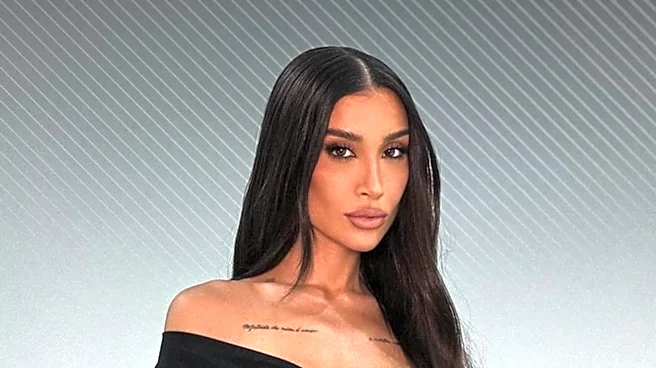
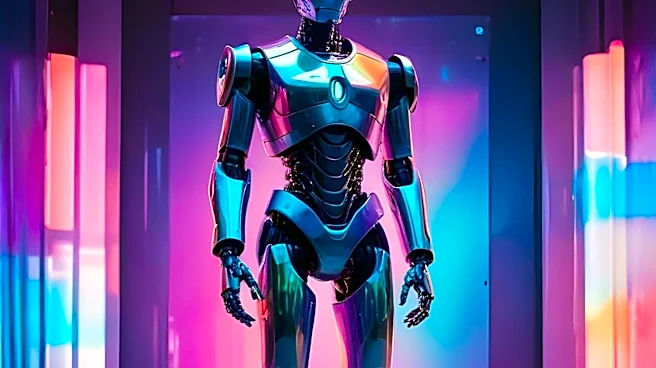
Bianca Censori, an architect and artist, has announced her latest performance art installation, 'BIO POP 2: BIANCA IS MY BABY DOLL.' This project features a 10-foot, 25-axis robotic self-portrait that speaks in Censori's voice and responds to visitor
questions. The installation, which has been five years in the making, is set to open in New York on December 14, 2026. A notable and controversial aspect of the exhibit is the requirement for visitors to kneel before the robotic figure to interact with it. This installation is the second part of a planned seven-part performance art series by Censori, following her debut in Seoul. Promotional materials for the project included images of a doll resembling Censori, a pill labeled 'BIO POP 2' and '200 mg,' and a cartoon illustration with phrases like 'she talks too much' and 'see all sides of her.'
Why It's Important?
This art installation challenges conventional notions of audience interaction and artistic authority. The requirement for visitors to kneel before the robotic self-portrait has sparked confusion and criticism on social media, with some users labeling it as 'weird,' 'bizarre,' and 'close to self-idolization.' This reaction highlights a broader societal discussion about the role of the artist, the nature of performance art, and the boundaries of audience engagement. The project's exploration of 'manufactured authority' and the question of 'what do we believe, and who do we bow to?' could provoke significant debate within the art community and among the public, potentially influencing future interactive art forms and public perception of artistic expression.
What's Next?
The 'BIO POP 2: BIANCA IS MY BABY DOLL' installation is scheduled to open in New York on December 14, 2026. Following its opening, it is anticipated that there will be further public and critical reactions to the exhibit, particularly concerning the kneeling requirement. The project's reception will likely influence the trajectory of Censori's remaining five installments in her performance art series. The discussions generated by this installation could also contribute to ongoing conversations about the ethics of interactive art, the use of robotics in artistic expression, and the evolving relationship between artists and their audiences in the digital age.
Beyond the Headlines
The installation's provocative demand for visitors to kneel before a robotic self-portrait delves into deeper themes of power dynamics, reverence, and the human-machine interface. By giving the machine her voice, Censori is exploring the concept of artificial intelligence and its potential to command respect or even submission. This raises philosophical questions about the nature of authority in an increasingly technologically advanced world. The public's mixed reactions also underscore a cultural tension between artistic freedom and perceived self-aggrandizement, prompting reflection on the fine line between artistic statement and controversial spectacle. The project could serve as a significant case study in the intersection of art, technology, and social commentary.