






What's Happening?
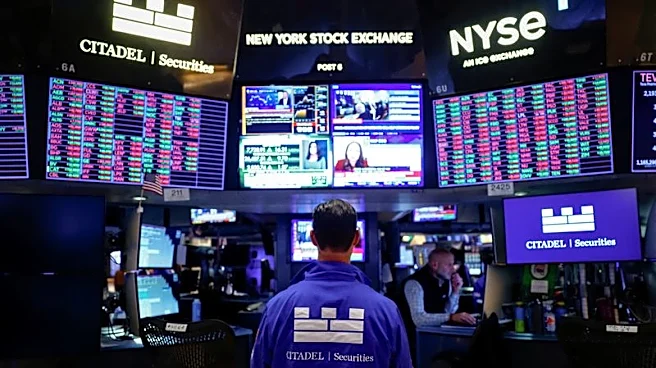
Citigroup has tactically reduced its exposure to US equities, removing its overweight recommendation and closing a long position in the equal-weighted S&P 500 on October 13. This decision was driven by concerns over stretched investor positioning, elevated
optimism, and deteriorating risk-reward conditions in the market. The move by Citigroup preceded a recent technology-led selloff in US stocks, which saw the Nasdaq Composite fall 2.86% and the S&P 500 lose 1.82% on October 30. The bank's action reflects a more cautious stance, particularly as investors reassess the financial viability of significant AI infrastructure investments. While this adjustment does not necessarily change Citigroup’s previously published 8,100 year-end index target, it highlights a growing divergence among investment banks regarding the market's immediate future.
Why It's Important?
Citigroup's decision to reduce US equity exposure signals a cautious outlook from a major financial institution, potentially influencing broader market sentiment and investment strategies. This move is particularly significant in the context of the ongoing debate about the sustainability of AI-driven growth. The central concern is whether companies financing AI infrastructure can generate sufficient returns to justify their substantial spending. If other major banks follow suit, it could lead to further reallocations of capital within the US equity market, potentially shifting away from expensive technology stocks towards sectors perceived as more stable, such as healthcare or energy, as seen with RBC Capital Markets' recent adjustments. This reassessment of capital efficiency across the AI ecosystem could impact valuations and investment flows for technology companies and related industries.
What's Next?
The market will likely continue to monitor how other major investment banks adjust their strategies in response to concerns about AI investment returns and overall market conditions. Upcoming earnings reports from key technology companies like Apple, AMD, Super Micro Computer, Qualcomm, and Arm Holdings in early November will provide further insights into the sector's health and investment outlook. Additionally, the US employment report on November 6 will be crucial, as a weaker labor market could temper expectations for further Federal Reserve rate increases, potentially easing pressure on technology valuations. Conversely, strong employment data could reinforce concerns about elevated interest rates, making financing more expensive for companies with long-term investment plans, particularly in AI infrastructure.
Beyond the Headlines
The cautious stance adopted by Citigroup and other firms like RBC Capital Markets points to a deeper re-evaluation of the long-term financial implications of the AI boom. While demand for AI infrastructure is undeniable, the market is increasingly scrutinizing the profitability and return on investment for the massive capital expenditures involved. This shift could lead to a more discerning investment environment where companies are pressured to demonstrate clear pathways to profitability from their AI investments, rather than relying solely on growth narratives. The potential for higher borrowing costs and accelerating depreciation expenses to weaken future profitability, even with strong demand, highlights a critical challenge for the technology sector and could trigger a broader re-assessment of valuation models for high-growth companies.