






What's Happening?
Data centers are increasingly exploring the use of seawater for cooling systems to manage the significant heat generated by their operations, particularly with the rising demands of artificial intelligence (AI). This approach can reduce power consumption
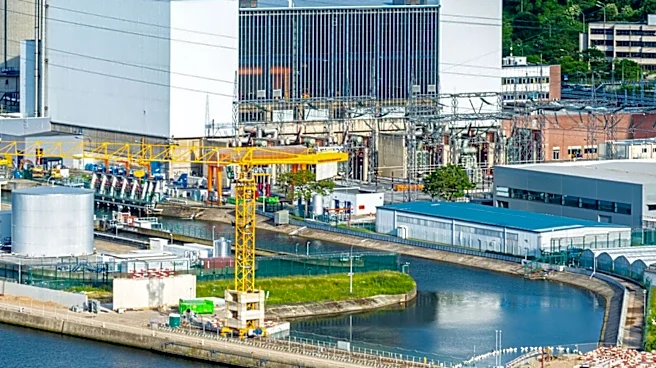
by 30% to 40% by eliminating the need for heavy industrial chillers. There are several implementation models, including submersible and underwater data centers where sealed server capsules are submerged in the ocean, using the cold surrounding water as a natural heat sink. Floating Data Centers (FDCs) are built on offshore platforms, utilizing seawater for cooling and integrating green energy sources like solar or tidal waves. Land-based coastal facilities also employ closed-loop systems, pumping cold seawater through heat exchangers to cool internal freshwater loops before returning the seawater to the ocean. While offering massive energy savings and preventing freshwater depletion, this method presents significant challenges such as rapid corrosion and mineral buildup due to salt, requiring expensive materials like titanium or heavy-duty synthetic alloys. Additionally, there are concerns about thermal pollution if heated water is returned to the ocean without careful dispersion, potentially disrupting marine ecosystems.
Why It's Important?
The adoption of seawater cooling for data centers holds substantial implications for the U.S. technology and energy sectors. With the exponential growth of AI, the energy consumption of data centers is a critical concern, contributing to both operational costs and environmental impact. By significantly reducing energy usage, seawater cooling can lead to substantial cost savings for tech companies, potentially fostering more sustainable and economically viable data center operations. This innovation also addresses the issue of freshwater depletion, a growing concern in many regions, by eliminating the need for municipal drinking water supplies in cooling processes. However, the high costs associated with corrosion-resistant materials and the complexities of maintenance in underwater or remote offshore environments could pose financial and logistical hurdles for widespread adoption. The environmental impact of thermal pollution also necessitates careful regulatory oversight and advanced engineering solutions to protect marine ecosystems, which is a critical consideration for U.S. coastal communities and environmental policy.
What's Next?
Further research and development will likely focus on mitigating the challenges of corrosion and biofouling in seawater cooling systems. Innovations in materials science and engineering will be crucial to develop more cost-effective and durable components for these systems. Companies like Microsoft, with its Project Natick, will continue to refine underwater server pod designs to enhance reliability and reduce maintenance complexities. Regulatory bodies in the U.S. will need to establish clear guidelines and standards for thermal discharge to prevent adverse effects on marine life, potentially leading to new environmental policies for coastal data center operations. The integration of renewable energy sources with Floating Data Centers will also be a key area of development, aiming to create fully sustainable and self-sufficient data infrastructure. As AI demands continue to escalate, the pressure to find efficient and environmentally friendly cooling solutions will drive ongoing investment and innovation in this field.
Beyond the Headlines
The shift towards seawater cooling for data centers represents a broader paradigm shift in how critical infrastructure interacts with natural environments. This approach highlights the increasing need for symbiotic relationships between technology and nature, where natural resources are harnessed for efficiency while minimizing ecological footprint. The ethical implications of potentially altering marine environments through thermal discharge, even if carefully managed, will likely spark public debate and require transparent communication from tech companies. Furthermore, the concept of 'underwater server pods' and 'floating data centers' pushes the boundaries of traditional infrastructure, potentially leading to new architectural and engineering disciplines focused on marine-based technological installations. This could also influence urban planning in coastal areas, as the proximity to the ocean becomes a strategic advantage for data-intensive industries. The long-term success of these initiatives will depend not only on technological advancements but also on robust environmental stewardship and public acceptance, shaping the future landscape of digital infrastructure.