





What's Happening?
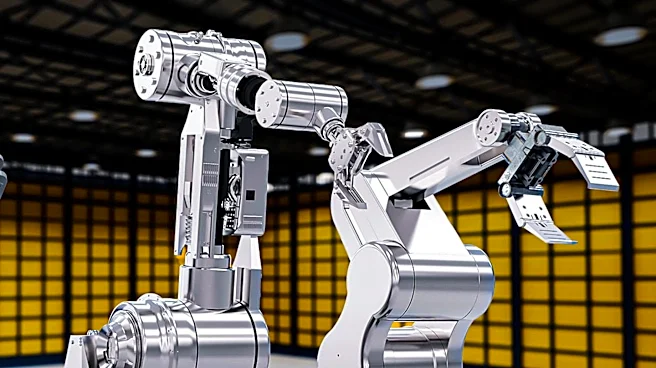
Boston Dynamics has introduced a new feature in its Atlas humanoid robot, allowing it to autonomously swap its own battery in under three minutes. This capability is part of the company's efforts to transform Atlas from a demonstration machine into a practical
industrial robot. The robot, designed for continuous operation, can now work across multiple shifts with minimal human intervention. Atlas is equipped with tactile sensing and a 360-degree camera system, enabling it to perform repetitive tasks in industrial settings. The robot's ability to change its own battery addresses the issue of downtime, making it more efficient for long-term use.
Why It's Important?
The introduction of a self-swapping battery in the Atlas robot represents a significant advancement in industrial automation. This feature reduces the dependency on human intervention, allowing robots to operate continuously and efficiently. It addresses one of the major challenges in robotics—downtime due to battery recharging—thereby enhancing productivity in industrial environments. As companies seek to automate more processes, the ability of robots like Atlas to perform tasks autonomously and maintain themselves is crucial. This development could lead to broader adoption of humanoid robots in industries, potentially transforming manufacturing and logistics operations.