




What's Happening?
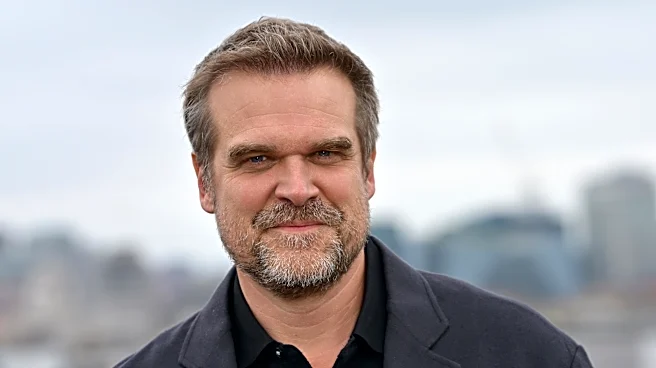
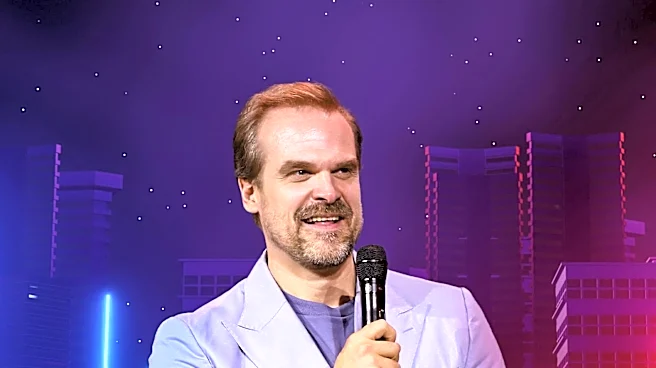
David Harbour, known for his role as Red Guardian in Marvel’s 'Avengers: Doomsday,' has a career that extends beyond the superhero genre. He has significant Shakespearean stage experience, including playing Bassanio in 'The Merchant of Venice' on Broadway
in 2010. This theatrical background is part of a broader trend where actors with classical training transition into major cinematic roles. The connection between Marvel and Shakespeare is further highlighted by other actors in 'Avengers: Doomsday' who also have notable Shakespearean credits, such as Ian McKellen, Patrick Stewart, Alan Cumming, Kelsey Grammer, and Pedro Pascal. Directors like Kenneth Branagh and Joss Whedon also bridge these two worlds, bringing their Shakespearean sensibilities to Marvel films.
Why It's Important?
The integration of classically trained actors like David Harbour into blockbuster franchises such as Marvel underscores the value of foundational acting skills in diverse performance contexts. This trend suggests that the rigorous training involved in performing Shakespeare, which emphasizes language, character depth, and physical presence, is highly transferable and beneficial for portraying complex characters in large-scale cinematic productions. For the entertainment industry, this means a continued reliance on actors who can bring gravitas and nuanced performances to fantastical roles, potentially elevating the artistic quality of superhero films. It also exposes a broader audience, particularly Marvel fans, to the world of classical theater, potentially sparking interest in Shakespearean works.
What's Next?
This ongoing crossover between classical theater and major film franchises is likely to continue, with more actors from Shakespearean backgrounds potentially being cast in high-profile roles. The success of actors like David Harbour in both realms may encourage aspiring performers to pursue classical training as a pathway to diverse career opportunities. Furthermore, the thematic parallels between Shakespearean political dramas and Marvel's intricate storylines, as noted by the source, suggest that future adaptations or original works might increasingly draw inspiration from classical narratives. This could lead to a richer storytelling landscape in Hollywood, blending timeless themes with modern cinematic techniques.
Beyond the Headlines
The phenomenon of actors moving between Shakespeare and Marvel highlights a deeper cultural interplay between high art and popular entertainment. It challenges the traditional separation of these two spheres, demonstrating that the skills honed in classical theater are not only relevant but highly valued in contemporary blockbusters. This convergence can enrich both worlds: Shakespearean productions gain new audiences through the recognition of their stars, while Marvel films benefit from the depth and gravitas that classically trained actors bring. It also speaks to the enduring power of storytelling, whether through ancient plays or modern myths, to explore universal themes of power, ambition, and human nature.