



What's Happening?
SoftBank Group shares experienced a significant drop of over 15% on Friday, reaching their lowest point since early April. This decline occurred amidst a broader downturn in artificial intelligence and technology valuations, leading to increased scrutiny
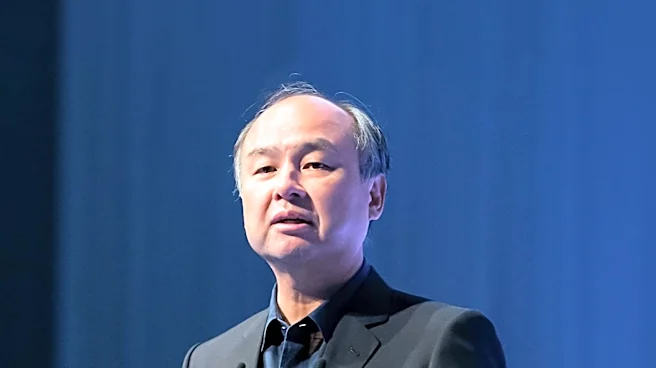
of the Japanese firm's extensive tech holdings. The company's founder and Chairman, Masayoshi Son, publicly expressed regret for not investing in AI lab Anthropic, which recently had a strong public market debut. This sentiment, coupled with the wider tech market slump, has put SoftBank's substantial $65 billion investment in OpenAI under intense focus. The broader tech stock declines also impacted the Nikkei 225, which fell nearly 5%, as investors began to question the long-term returns on the hundreds of billions of dollars invested in AI over recent years. SoftBank's chip designer Arm Holdings, a key asset, also saw a 31% slump in the past six months due to concerns about slowing AI spending.
Why It's Important?
The sharp decline in SoftBank's share price and the broader tech market rout highlight a growing investor skepticism regarding the sustainability of current AI valuations. This shift in sentiment could have significant implications for the U.S. technology sector, particularly for companies heavily reliant on AI investments or those with high valuations based on future AI potential. SoftBank's substantial investments in major AI players like OpenAI mean that any re-evaluation of these assets could ripple through the global tech ecosystem, affecting venture capital funding, IPO prospects, and overall market confidence. The regret expressed by Masayoshi Son underscores the competitive and rapidly evolving nature of the AI landscape, where strategic investment decisions can have massive financial consequences. A slowdown in AI spending, as indicated by Arm Holdings' performance, could impact U.S. chipmakers and other hardware providers crucial to AI development.
What's Next?
The immediate future for SoftBank and the broader AI market will likely involve continued volatility as investors reassess valuations and long-term growth prospects. SoftBank's ability to monetize its OpenAI investment, which has been delayed until at least 2027 due to a postponed IPO, will be a critical factor. Further delays or a downward revision of OpenAI's valuation could exert additional pressure on SoftBank's balance sheet. The performance of other AI-related companies, particularly those with recent public market debuts like Anthropic, will also be closely watched as indicators of market sentiment. Stakeholders, including institutional investors and tech companies, will be monitoring for any signs of a sustained correction in AI valuations or a shift in investment strategies from major players like SoftBank.
Beyond the Headlines
This development points to a potential recalibration of expectations within the artificial intelligence sector, moving beyond the initial euphoria that drove significant valuations. The regret expressed by a prominent investor like Masayoshi Son could signal a more cautious approach to future AI investments, emphasizing the importance of early-stage identification and strategic positioning in a rapidly evolving technological frontier. Ethically, the immense capital flows into AI raise questions about responsible investment and the potential for market bubbles if valuations outpace tangible returns. Legally, the delayed IPOs and fluctuating valuations could lead to increased scrutiny from regulators regarding transparency and investor protection in the high-stakes AI market. Culturally, this market correction might temper the widespread optimism surrounding AI, prompting a more grounded discussion about its practical applications and economic impact.