








What's Happening?
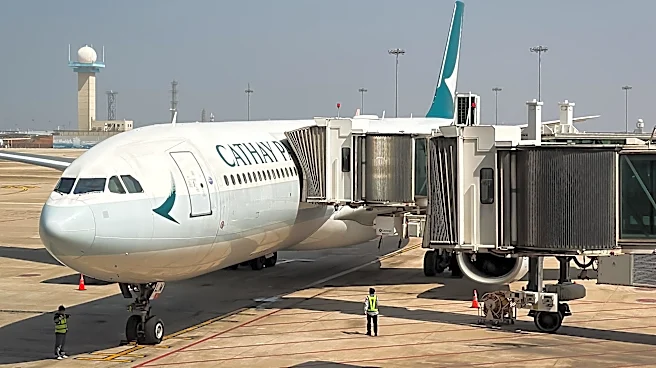
Cathay Pacific Group has announced an increase in its firm orders for Airbus A321neos and A330-900s. The airline exercised purchase rights for 11 A330-900s and three A321neos, adding to its existing orders for these aircraft types. This move is part of
Cathay's strategy to meet its aircraft order goals, which were outlined earlier this year. As of June 30, Cathay had purchase rights for a total of 87 aircraft. The newly ordered A330-900s are intended to support the growth of Cathay Pacific’s regional network, building on an initial order of 30 such aircraft in 2024. The A321neos will enhance the growth potential of its subsidiary, HK Express, particularly for destinations in mainland China and other short-haul routes. The Cathay Group had previously ordered 32 A321neo and A320neo aircraft in 2023 and currently operates 35 A321neos. In August, the group stated its intention to increase scheduled deliveries from 2026 onwards to 150 aircraft. With these latest orders, scheduled deliveries have reached 120 aircraft, indicating that further orders for at least 30 more aircraft are anticipated.
Why It's Important?
This expansion of Cathay Pacific's fleet signifies a strategic investment in its future operational capacity and market reach. For the aviation industry, it demonstrates continued confidence in air travel demand and the Airbus aircraft models. The A330-900s will bolster Cathay Pacific's regional network, potentially increasing connectivity and passenger volume across Asia. The A321neos are crucial for HK Express's growth, especially in the Chinese mainland market, which is a significant and rapidly expanding segment for air travel. This investment could lead to increased competition on regional routes, potentially benefiting consumers through more options and competitive pricing. The airline's plan to induct 150 aircraft over the next decade, with half for replacement and half for growth, suggests a long-term vision for modernization and expansion, which could create opportunities for aircraft manufacturers, maintenance providers, and related aviation services. The substantial capital expenditure involved also reflects the financial health and strategic ambitions of the Cathay Pacific Group.
What's Next?
Cathay Pacific is expected to place orders for at least 30 more aircraft to reach its stated goal of 150 scheduled deliveries from 2026 onward. The airline plans to induct these 150 aircraft over the next 10 years, with approximately half replacing older models and the other half contributing to fleet growth. This will boost the group's total fleet to about 300 aircraft, nearly doubling its current operational size of 234 aircraft. The integration of these new aircraft will likely involve significant logistical and operational planning, including pilot training, ground staff adjustments, and route optimization. The focus on regional network growth and expansion into the Chinese mainland market suggests that Cathay Pacific will continue to monitor and adapt to evolving travel demands in these key areas. Further announcements regarding additional aircraft orders and specific route expansions are anticipated as the airline progresses towards its long-term fleet objectives.
Beyond the Headlines
The strategic decision by Cathay Pacific to significantly expand its fleet, particularly with a focus on regional and short-haul routes, highlights a broader trend in the aviation industry towards optimizing fleet composition for specific market segments. The emphasis on the Chinese mainland market for HK Express underscores the growing economic and travel ties within Asia. This move could also reflect a post-pandemic recovery strategy, where airlines are re-evaluating their long-term fleet needs to meet anticipated demand and enhance operational efficiency. The blend of aircraft for replacement and growth indicates a dual strategy of modernization and expansion, aiming to reduce the average age of the fleet while increasing capacity. This could have environmental implications, as newer aircraft models are generally more fuel-efficient, contributing to reduced emissions per passenger. Furthermore, the substantial investment in new aircraft signals a commitment to maintaining a competitive edge in a dynamic and challenging global aviation landscape.