






What's Happening?
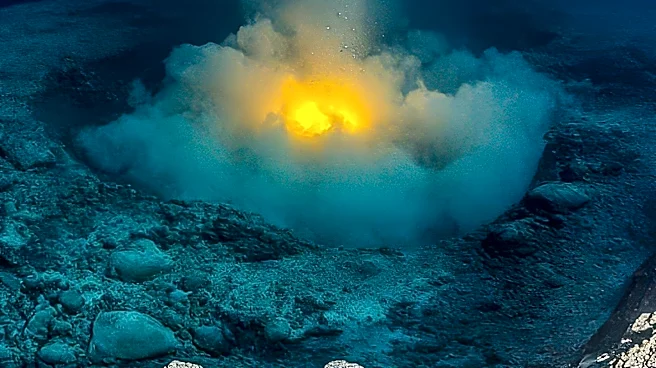
The United States Geological Survey (USGS) has issued a warning regarding the potential for deep-sea minerals to spontaneously combust when brought to the surface. This discovery emerged after two samples of metal-sulfide rocks, collected in 2022 from
the Escanaba Trough off the Oregon–California border, spontaneously caught fire in a laboratory setting. The event caused temperatures exceeding 100 °C and completely oxidized the samples. The Escanaba Trough is part of the U.S. Exclusive Economic Zone (EEZ) and is known for its hydrothermal activity, which creates deep-sea deposits rich in metals like copper, zinc, and iron. Researchers, in collaboration with the Bureau of Ocean Energy Management (BOEM) and the National Oceanic and Atmospheric Administration (NOAA), collected 57 hydrothermal rock samples. The combustible samples were found to be primarily composed of nanocrystalline marcasite, a form of iron sulfide that becomes unstable in the presence of oxygen, especially when subjected to heat and mechanochemical forces like crushing or grinding.
Why It's Important?
This finding has significant implications for the nascent deep-sea mining industry, particularly as the International Seabed Authority (ISA) has already granted exploration contracts for sulfide minerals in other deep-sea regions. The USGS explicitly states that this is a 'potential hazard that could merit special consideration if deep-sea mining of seafloor massive sulfide deposits moves forward.' The production of heat through exothermic reactions in these minerals could lead to 'rapid onset fires on ships,' posing a serious safety risk to personnel and equipment. Unlike land-based mining, deep-sea mining involves bringing materials from an anoxic, high-pressure environment to an oxygen-rich, atmospheric one, which can drastically alter the chemical behavior of these minerals. Understanding these unique properties is crucial for developing appropriate safety protocols and regulations to prevent accidents and protect human lives and valuable assets in this emerging industry.
What's Next?
The USGS recommends further investigation into the production of heat through exothermic reactions in seafloor massive sulfide deposits. This research will be critical in shaping safety regulations and operational procedures for any future deep-sea mining activities. The findings will likely prompt a re-evaluation of how these minerals are handled, transported, and processed once brought to the surface. The industry will need to develop new technologies and methods to mitigate the risk of spontaneous combustion, potentially involving specialized storage, inert atmospheres, or pre-treatment processes. Furthermore, this discovery adds another layer of complexity to the ongoing debate surrounding deep-sea mining, which already faces significant environmental concerns from conservationists regarding its potential impact on fragile ocean ecosystems. The safety aspect will now be a prominent factor in discussions about the viability and responsible implementation of deep-sea resource extraction.
Beyond the Headlines
The spontaneous combustion of deep-sea rocks highlights a broader theme of unforeseen challenges in exploiting extreme environments. The deep ocean, a frontier for resource extraction, presents unique physical and chemical conditions that can lead to unexpected reactions when materials are brought to the surface. This incident underscores the importance of thorough scientific investigation and risk assessment before commercial-scale operations commence in such novel environments. Beyond the immediate safety concerns, this discovery could influence the economic feasibility of deep-sea mining, as additional safety measures and specialized handling procedures may increase operational costs. It also serves as a reminder that our understanding of deep-sea geology and chemistry is still evolving, and that the transition from exploration to exploitation in these areas requires a cautious and adaptive approach, balancing resource needs with safety and environmental stewardship.