









What's Happening?
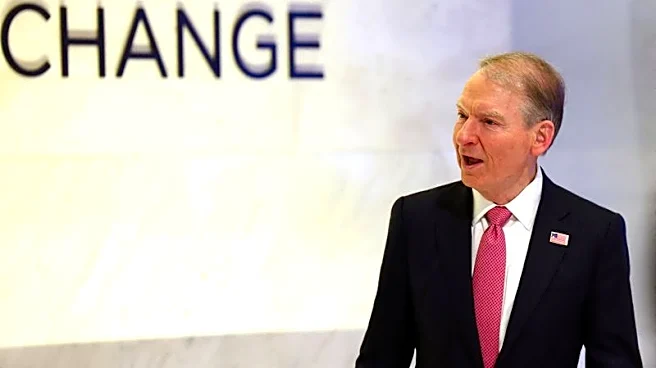
Terrence Duffy, CEO of CME Group Inc., announced that the exchange operator plans to sue the Commodity Futures Trading Commission (CFTC) following the agency's approval of perpetual futures contracts. The CFTC recently allowed prediction market platform
Kalshi to offer bitcoin perpetual futures, marking the first time such contracts are permitted in the U.S. Perpetual futures are unique as they have no expiration date, enabling traders to speculate on prices without owning the underlying asset. Duffy argues that these contracts should be classified as swaps under the Dodd-Frank Act, which would require them to be processed through CME. The lawsuit is set to be filed on Thursday, with Duffy emphasizing the importance of this legal action.
Why It's Important?
The lawsuit by CME Group against the CFTC could have significant implications for the regulation of financial products in the U.S. If CME's argument that perpetual futures should be classified as swaps is upheld, it could alter the regulatory landscape for these financial instruments, potentially affecting how they are traded and who can offer them. This case highlights the ongoing tension between regulatory bodies and financial institutions over the classification and oversight of emerging financial products. The outcome could influence future regulatory decisions and the development of similar financial instruments, impacting traders, exchanges, and the broader financial market.
What's Next?
As the lawsuit progresses, stakeholders in the financial industry will be closely monitoring the case for its potential to set a precedent in the classification and regulation of financial products. The CFTC's response and defense will be crucial in determining the future of perpetual futures in the U.S. market. Additionally, the decision could prompt other exchanges and financial institutions to reassess their strategies regarding similar products. The legal proceedings may also lead to further discussions and potential revisions of existing financial regulations to accommodate new and evolving financial instruments.