


What's Happening?
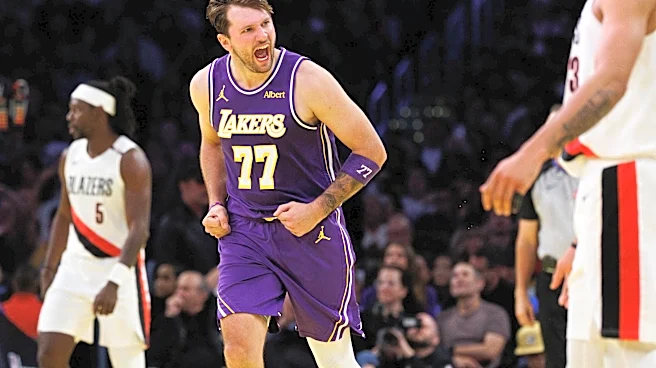
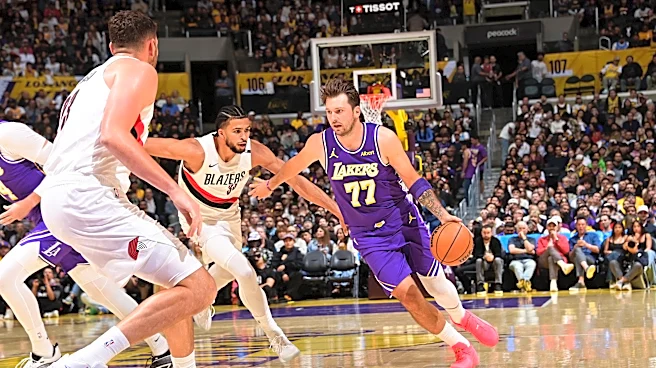
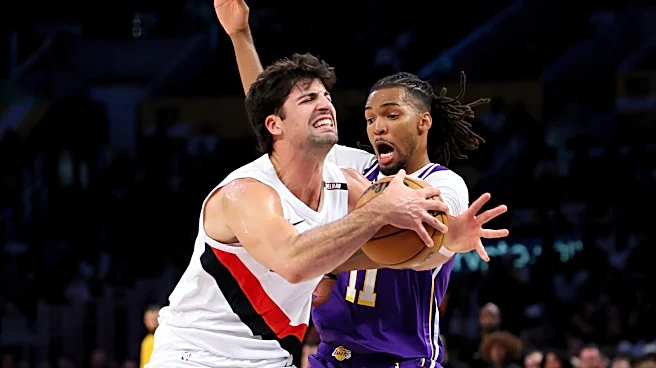
During a recent NBA game between the Portland Trail Blazers and the Los Angeles Lakers, an unusual post-game incident occurred. Following the Lakers' 124-118 victory, Trail Blazers center Robert Williams III attempted to retrieve the game ball to commemorate
a significant career milestone for his teammate, Jrue Holiday. Holiday had just surpassed Hall of Fame point guard Steve Nash to enter the NBA's top 100 all-time scorers. However, a Los Angeles Lakers staff member intervened, informing Williams that the ball needed to be returned to the NBA. According to Jason Quick of The Athletic, Williams ultimately surrendered the ball, preventing him from presenting it to Holiday. The staff member's action, while potentially following established procedures for handling official game equipment, led to an uncomfortable exchange and prevented a teammate from honoring Holiday's achievement.
Why It's Important?
This incident highlights the intersection of player camaraderie, league protocols, and the recognition of individual achievements within the NBA. For players like Robert Williams III, honoring a teammate's milestone, especially for a respected veteran like Jrue Holiday, is a significant gesture that fosters team morale and acknowledges a player's legacy. Holiday, known for his elite perimeter defense, championship experience, and unselfish play, reached a notable scoring achievement that might otherwise be overshadowed by his defensive prowess. The intervention by the Lakers staff member, regardless of intent, underscores the strict regulations surrounding game equipment and could be perceived as a missed opportunity to celebrate a player's career highlight publicly. This situation could prompt discussions within the league regarding how such milestones are acknowledged and whether more flexible protocols are needed to allow for these moments of recognition.
What's Next?
While the immediate impact of this specific incident is likely limited, it could spark broader conversations within the NBA and among teams regarding the handling of game balls for milestone achievements. It remains unclear whether the game ball will eventually reach Jrue Holiday. The situation might lead to a review of existing league policies on game ball retention for significant player accomplishments, potentially resulting in clearer guidelines or exceptions for such events. Teams and players might also become more proactive in understanding and navigating these protocols to ensure that future milestones are properly celebrated without interference. The incident also serves as a reminder of the often-unseen operational aspects of professional sports and the balance between strict adherence to rules and the human element of sportsmanship and recognition.
Beyond the Headlines
Beyond the immediate event, this incident touches upon the evolving culture of player recognition and the role of team and league in celebrating individual achievements. In an era where player narratives and personal milestones are increasingly highlighted, the inability to secure a game ball for a top-100 scoring achievement, particularly for a player like Holiday whose contributions often extend beyond raw statistics, can feel anticlimactic. It raises questions about the value placed on tangible mementos in professional sports and whether league procedures inadvertently diminish these moments. The incident also subtly reflects the power dynamics between league officials, team staff, and players, and how these interactions can shape the perception of a player's legacy and the overall fan experience.