









What's Happening?
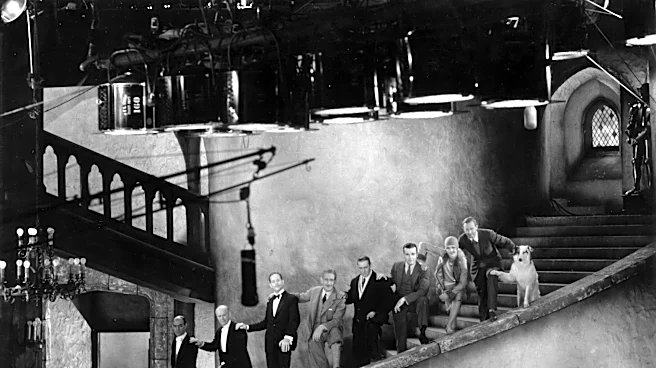
The UC Irvine Langson Orange County Museum of Art in Costa Mesa has launched a new exhibition titled 'Staging California in Early Hollywood.' This exhibition explores the intersection of plein air artists and Hollywood cinema, highlighting how Southern
California landscapes were used as backdrops in early films. The exhibition is divided into three sections, showcasing the role of place in film, the emergence of the Hollywood studio system, and the contributions of uncredited artists. Notable works include those by Paul Grimm and George Gibson, who contributed to films like 'Noah's Ark' and 'The Wizard of Oz.' The exhibition also features a large-scale backdrop from 'The Sound of Music,' emphasizing the collaborative nature of scenic art in Hollywood. The exhibition is on display through October 4, 2026.
Why It's Important?
This exhibition is significant as it sheds light on the often-overlooked contributions of plein air artists to the Hollywood studio system. By highlighting the role of these artists in creating iconic film backdrops, the exhibition underscores the cultural and historical importance of art in cinema. It also brings attention to the uncredited artists whose work was crucial in shaping the visual narratives of early Hollywood films. The exhibition not only celebrates the artistic heritage of Southern California but also provides a platform for contemporary discussions on art and storytelling, bridging historical and modern perspectives.
What's Next?
As the exhibition continues, it is expected to attract art and film enthusiasts, fostering a deeper appreciation for the artistic contributions to early Hollywood. The museum may also host related events or discussions to further explore the themes presented in the exhibition. Additionally, the exhibition's success could encourage similar initiatives that highlight the intersection of art and cinema, potentially leading to more collaborative projects between museums and film studios.
Beyond the Headlines
The exhibition offers a unique opportunity to reflect on the cultural and economic impact of the Hollywood studio system on local communities and artists. It raises questions about the recognition and credit given to artists in collaborative projects, a topic that remains relevant in today's creative industries. Furthermore, the exhibition's focus on the use of California landscapes in film highlights the state's ongoing role as a hub for artistic and cinematic innovation.