






What's Happening?
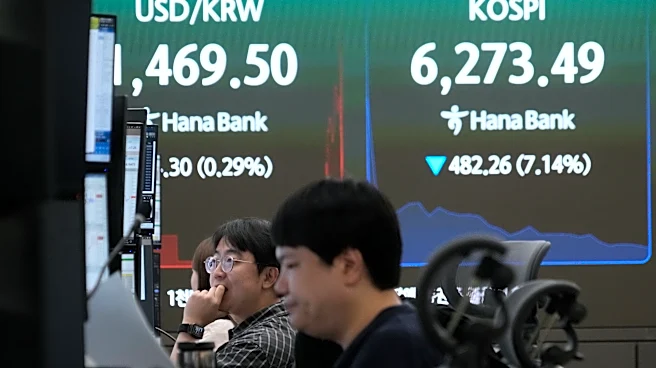
Semiconductor stocks experienced significant declines globally, with major losses in Asia and the US. South Korea's SK Hynix and Samsung Electronics saw substantial drops, while US companies like AMD, Micron, and Nvidia also faced declines. The downturn
was triggered by news of a Chinese breakthrough in immersion deep ultraviolet lithography machines, a technology critical to chip manufacturing. This development threatens the business of ASML, a leader in this domain, and raises concerns about the global chip supply chain. Additionally, reports of memory chip price peaks in 2027 and the impact of leveraged ETFs contributed to market volatility.
Why It's Important?
The decline in semiconductor stocks underscores the fragility of the global chip market, heavily influenced by technological advancements and geopolitical tensions. China's progress in chipmaking tools could reduce its reliance on foreign technology, challenging companies like ASML and affecting the global supply chain. This situation highlights the interconnectedness of global markets and the potential for significant economic impacts due to technological shifts. Investors and companies must navigate these uncertainties, balancing risks and opportunities in the evolving semiconductor landscape.
What's Next?
The semiconductor industry may face continued volatility as companies and investors assess the implications of China's technological advancements. Policymakers and industry leaders will likely monitor developments closely, considering potential regulatory responses to protect domestic industries. The situation may prompt further discussions on supply chain resilience and the strategic importance of semiconductor technology in global economic and security contexts.