





What's Happening?
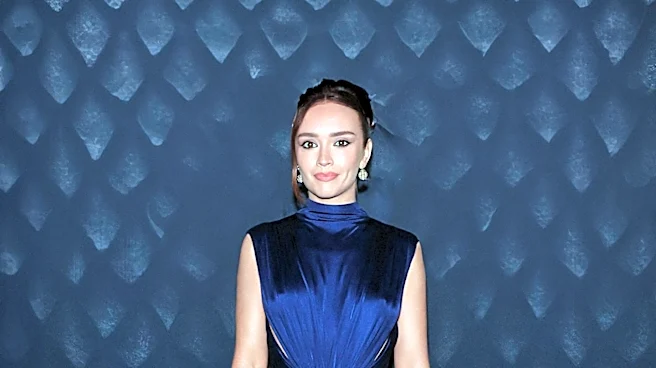
Olivia Cooke, known for her role as Alicent Hightower in HBO's 'House of the Dragon,' has announced her decision to delete all of her social media accounts. Cooke revealed this choice earlier this year, stating that it was part of an effort to lead a healthier
and more nourishing life away from the constant online noise. She explained in an interview with Town & Country that she feels happier offline, even if it means being disconnected from current online trends and conversations. Cooke emphasized that her decision was not about avoiding fans or publicity, but rather about prioritizing her personal well-being. She described social media as 'unhealthy' and expressed a desire to 'cull the things that just weren’t nourishing' for her, with social media being one of them. This move highlights a growing concern among individuals, including public figures, regarding the impact of social media on mental health and daily life.
Why It's Important?
Cooke's decision to step away from social media, despite her prominent role in a major television series, underscores a broader societal conversation about digital well-being and the pressures associated with online presence. For actors and public figures, social media often serves as a crucial platform for fan engagement, self-promotion, and maintaining a public image. Her choice to forgo these perceived benefits for personal health could influence other public figures and individuals to re-evaluate their own relationships with social media. It also brings attention to the potential negative impacts of constant online scrutiny and the pressure to maintain an active digital persona, especially for those in the entertainment industry. This move could contribute to a shift in how celebrities manage their public interactions, potentially leading to more authentic and less curated online presences, or even a complete withdrawal from certain platforms, prioritizing mental health over digital visibility.
What's Next?
It remains to be seen if Cooke's decision will inspire a trend among other public figures to similarly disengage from social media for mental health reasons. Her continued success in projects like 'House of the Dragon' and her upcoming role as Supergirl in the DC screen universe will demonstrate that a thriving career in the public eye is possible without an active social media presence. This could challenge the prevailing notion that social media engagement is a mandatory component of celebrity. The entertainment industry and public relations professionals may need to adapt their strategies for promoting talent and engaging with audiences if more actors follow suit. Furthermore, this could spark more open discussions about the responsibilities of social media platforms in fostering healthier online environments and the potential for individuals to reclaim their privacy and well-being in an increasingly digital world.
Beyond the Headlines
Beyond the immediate implications for celebrity culture, Cooke's action touches upon deeper ethical and cultural dimensions concerning the pervasive influence of social media. It highlights the tension between the perceived necessity of digital connectivity in modern society and the individual's right to mental and emotional well-being. Her experience, moving from navigating political pressure as Alicent Hightower to finding a personal solution to modern challenges by logging off, serves as a powerful metaphor for many who feel overwhelmed by online life. This could contribute to a broader cultural shift where valuing offline experiences and personal peace over constant digital engagement becomes more normalized. It also raises questions about the authenticity of online personas and the potential for a more genuine connection with audiences when interactions are not filtered through the often-demanding lens of social media platforms.