

What's Happening?
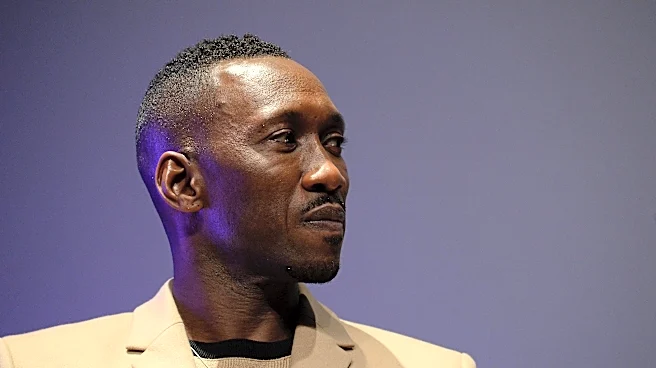
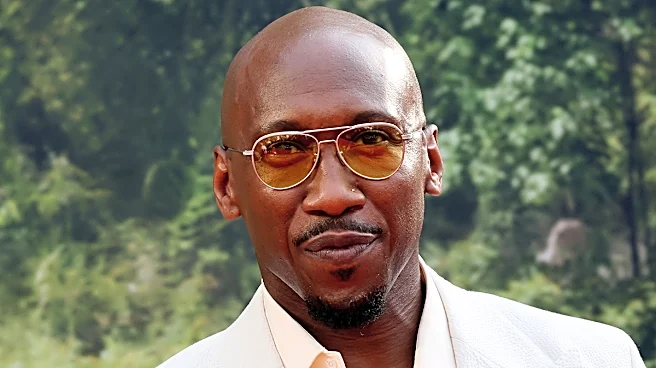
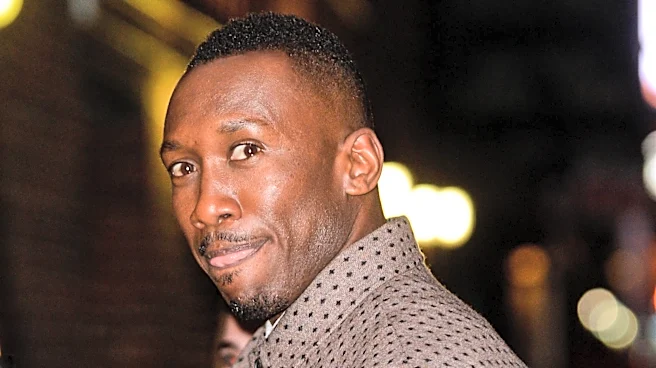
Mahershala Ali, a two-time Academy Award winner, has publicly stated that his Oscars for Best Supporting Actor in 'Moonlight' (2017) and 'Green Book' (2019) do not significantly aid him in securing new acting roles. Speaking on the '7pm in Brooklyn' podcast,
Ali explained that an Oscar is merely an award recognizing good work, but it does not translate into a guaranteed advantage in the casting process. He emphasized that the industry faces a scarcity of quality material, leading to a situation where there are more talented actors than there are suitable roles. Ali noted that many accomplished actors without Oscars are also actively seeking good material, placing him in a similar position despite his accolades. He further elaborated that the majority of greenlit projects do not contain roles for him, regardless of his awards, highlighting that actors often depend on writers and producers to create roles with them in mind.
Why It's Important?
Ali's perspective offers a critical insight into the realities of the entertainment industry, challenging the common perception that winning an Oscar automatically elevates an actor's career trajectory and access to roles. His comments underscore the persistent issue of limited quality material available for actors, suggesting that talent and recognition alone may not overcome systemic challenges in securing work. This situation impacts not only individual actors but also the diversity of storytelling, as Ali also touched upon how rollbacks in Diversity, Equity, and Inclusion (DEI) programs can influence what projects get greenlit. If companies are not pressured to reflect the diverse world, they may continue to center narratives around those already represented in their offices, potentially limiting opportunities for a broader range of actors and stories.
What's Next?
Ali's remarks may spark further discussion within the entertainment industry regarding the value of awards versus the practicalities of career sustainability. It could encourage a re-evaluation of how talent is nurtured and how opportunities are created, particularly for actors from underrepresented groups. While Ali continues to receive Oscar buzz for his latest role in Bassam Tariq’s 'Your Mother Your Mother Your Mother,' his statements suggest that even high-profile actors must remain proactive in seeking out meaningful projects. The ongoing conversation about DEI initiatives in Hollywood may also gain renewed attention, as Ali's comments link the availability of roles to broader industry practices concerning representation and inclusion.
Beyond the Headlines
Beyond the immediate implications for actors, Ali's observations highlight a deeper systemic issue within Hollywood: the imbalance between the supply of acting talent and the demand for diverse, high-quality narratives. This imbalance can lead to a homogenization of content if creators and studios prioritize certain types of stories or actors. The ethical dimension arises in how the industry defines 'good material' and who gets to tell those stories. If the decision-makers in Hollywood do not reflect the diversity of the audience, the stories produced may inadvertently exclude or misrepresent significant portions of the population. Ali's desire to pursue great material as a Black person, rather than being typecast in 'diversity projects,' speaks to the ongoing struggle for authentic representation and the desire for actors to be seen beyond their demographic categories.