



What's Happening?
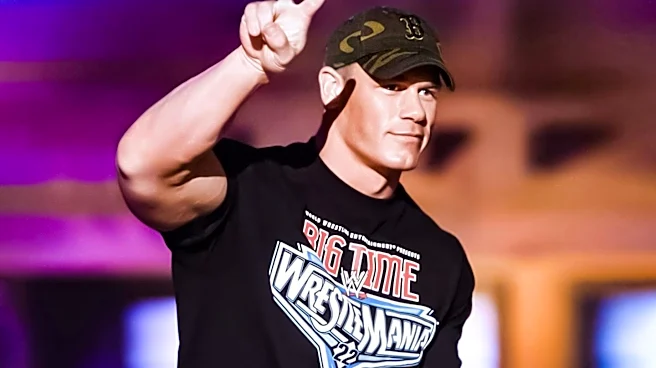
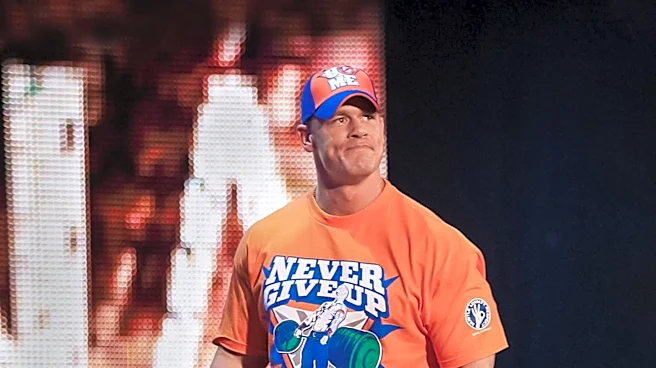
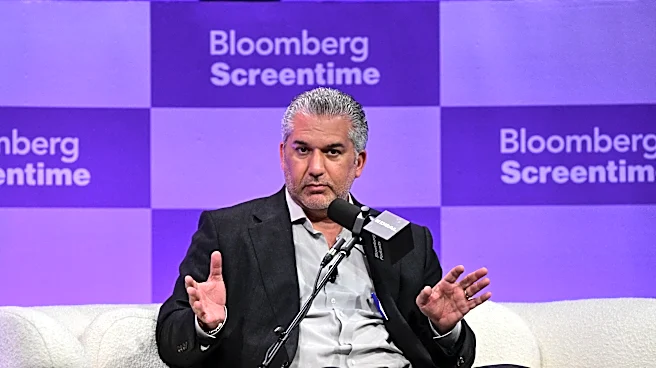
WWE CEO Nick Khan has announced that the company will not actively search for a successor to John Cena, who recently concluded his in-ring career. While Cena continues to make appearances for WWE, including the upcoming 'John Cena Classic,' Khan emphasized
that the company believes in the uniqueness of such stars. He stated, 'The next one never looks like the last one,' drawing parallels to other sports where iconic athletes like Alex Rodriguez are considered 'one of one.' Instead of seeking a direct replacement, WWE aims for young talent to forge their own distinct paths and become franchise cornerstones, much like Cena did. This approach signifies a shift from attempting to replicate past successes to fostering new, individual star power within the organization.
Why It's Important?
This strategic decision by WWE CEO Nick Khan carries significant implications for the professional wrestling industry and its talent development model. By explicitly stating that the company will not look for a 'next John Cena,' WWE is signaling a move away from a potentially limiting search for a carbon copy of a past superstar. This could encourage a more diverse range of characters and wrestling styles to emerge, as talent will not be pressured to fit a pre-defined mold. For aspiring wrestlers, this means greater freedom to develop unique personas and in-ring approaches, potentially leading to a more varied and engaging product for fans. Economically, this strategy could lead to a broader distribution of star power, reducing reliance on a single dominant figure and potentially creating multiple revenue streams through different fan bases. It also reflects a broader understanding in entertainment that true iconic status is often organically developed rather than manufactured.
What's Next?
Following Nick Khan's declaration, WWE is expected to focus on nurturing its current roster and developing new talent with an emphasis on individuality. This could manifest in various ways, such as increased creative freedom for performers, diverse storytelling approaches, and a spotlight on a wider array of wrestlers across different shows and platforms. The 'John Cena Classic' event, which is still set to kick off, will likely serve as a tribute to Cena's legacy while simultaneously highlighting the company's forward-looking approach. The success of this strategy will depend on WWE's ability to identify and cultivate compelling new stars who can connect with audiences on their own terms, without the burden of being compared directly to past legends. This shift could redefine what it means to be a 'franchise superstar' in professional wrestling.
Beyond the Headlines
The WWE's decision to not seek a 'next John Cena' reflects a deeper understanding of brand building and talent management in the entertainment industry. It acknowledges that genuine star power is often inimitable and that attempting to replicate it can lead to diluted versions of the original. This approach could foster a more authentic and innovative creative environment within WWE, allowing for the emergence of diverse narratives and characters that resonate with a broader audience. Ethically, it promotes the idea of individual expression and unique contributions, rather than a conveyor belt approach to talent. Culturally, it could lead to a richer tapestry of wrestling personalities, moving beyond the archetype of a single, dominant hero and embracing a more complex and multifaceted roster of stars. This strategy could set a precedent for other entertainment industries grappling with how to evolve beyond their established icons.