




What's Happening?
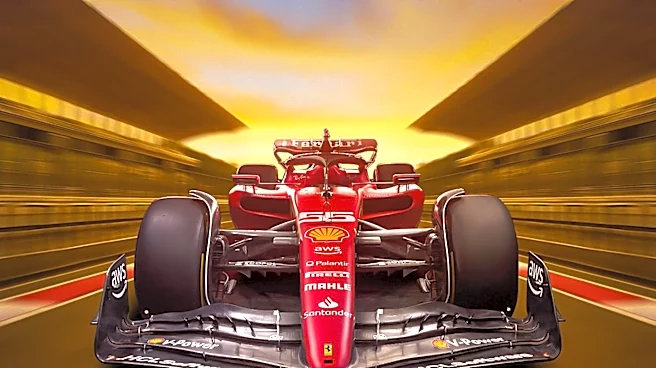
Ferrari has introduced a series of subtle yet significant aerodynamic upgrades to its Formula 1 car at the Zandvoort Grand Prix, starting from sprint qualifying. These modifications, which include changes to the bargeboard mounting system, the outer vertical
turning vane, and the trailing edge of the diffuser, are primarily aimed at enhancing aerodynamic consistency rather than outright downforce. According to Gary Anderson, these detailed adjustments are designed to optimize airflow to the underfloor and improve the sealing system along the sides of the floor. Additionally, Ferrari has been experimenting with the positioning of an infrared camera to achieve more accurate front and rear tire temperature readings, a critical factor for qualifying performance. These changes are considered cost-effective, allowing Ferrari to stay within the budget cap while seeking performance improvements.
Why It's Important?
These aerodynamic and tire monitoring developments are crucial for Ferrari's competitive performance in Formula 1. In a sport where marginal gains can significantly impact race outcomes, improving aerodynamic consistency provides drivers with greater confidence, enabling them to push harder without unexpected car behavior, especially during corner entry. This consistency is vital for maximizing the car's potential and reducing the risk of errors. Furthermore, precise tire temperature management is paramount for optimal grip and longevity, directly influencing qualifying lap times and race strategy. By refining their ability to monitor and manage tire temperatures, Ferrari aims to unlock better performance, particularly in qualifying sessions where achieving the ideal tire operating window is often challenging. These technical advancements could help Ferrari close the performance gap to leading teams and improve their championship standing.
What's Next?
The effectiveness of Ferrari's Zandvoort upgrades will be closely scrutinized in upcoming races. If these modifications prove successful in delivering enhanced aerodynamic consistency and improved tire management, other teams may adopt similar detailed approaches to car development within budget constraints. The ongoing optimization of the infrared camera position for tire temperature readings suggests a continuous effort to refine data acquisition and analysis, which could lead to more sophisticated tire strategies. The focus on consistency rather than raw downforce indicates a strategic shift towards making the car more predictable and manageable for drivers, potentially influencing future car design philosophies across the grid. The team will likely continue to fine-tune these elements and introduce further incremental improvements as the season progresses.
Beyond the Headlines
Beyond the immediate performance gains, Ferrari's approach highlights the intricate balance between innovation and regulatory compliance in Formula 1, particularly concerning the budget cap. The emphasis on 'finer details' and cost-effective modifications demonstrates how teams are finding creative ways to extract performance without exceeding financial limits. This trend could lead to a greater focus on micro-aerodynamic efficiencies and advanced sensor technologies across the sport. The pursuit of aerodynamic consistency also underscores the psychological aspect of racing, where driver confidence, built on predictable car behavior, can be as crucial as raw speed. This continuous quest for marginal improvements in every aspect of car design and data analysis reflects the high-stakes, technologically driven nature of modern Formula 1.