






What's Happening?
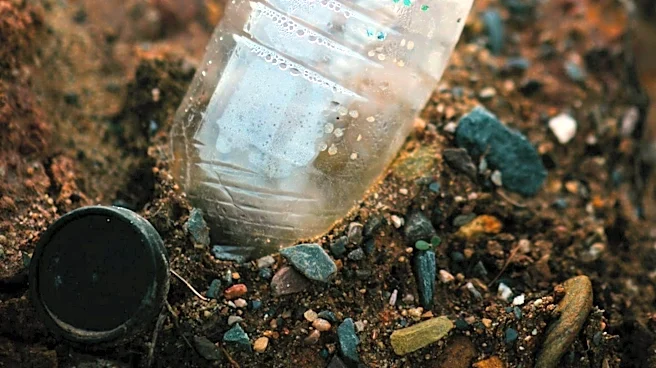
Nécessaire, a body care company, has announced its achievement of Plastic Neutral status through its partnership with rePurpose Global. This designation signifies that the company offsets its plastic footprint by funding the removal of an equivalent amount
of plastic waste from the environment. While this initiative addresses the company's environmental impact by contributing to cleanup efforts, it does not directly reduce the amount of plastic used in its products or packaging. Nécessaire's approach involves a payment for plastic cleanup elsewhere, rather than a direct reduction in its own plastic consumption. The company is also a certified B Corp, holds The Climate Label for 2026, and participates in 1% for the Planet, indicating a broader commitment to environmental and social responsibility. However, most of its product range continues to be packaged in plastic bottles and tubes.
Why It's Important?
Nécessaire's move to achieve Plastic Neutral status highlights a growing trend among consumer brands to address environmental concerns, particularly plastic pollution. This initiative is important as it demonstrates a company's willingness to invest in solutions for plastic waste, even if it involves offsetting rather than direct reduction. For consumers, this status offers a way to support brands that are actively engaged in environmental stewardship, potentially influencing purchasing decisions. However, it also raises questions about the effectiveness of offset programs versus direct reduction strategies in tackling the root causes of plastic pollution. The transparency of such claims is crucial, as consumers increasingly scrutinize corporate environmental efforts. This approach could set a precedent for other beauty and personal care brands, encouraging them to adopt similar offsetting programs or to innovate in sustainable packaging solutions.
What's Next?
In the future, Nécessaire may face increased pressure to not only offset its plastic use but also to implement more direct strategies for reducing plastic in its product lifecycle. This could involve exploring alternative packaging materials, developing refill programs, or investing in closed-loop recycling systems. The company's continued commitment to its B Corp certification and other environmental labels will likely require ongoing evaluation and improvement of its sustainability practices. Consumers and environmental advocacy groups may push for greater transparency regarding the specific projects funded through rePurpose Global and the measurable impact of these initiatives. The broader industry may also see a shift towards more stringent definitions of 'plastic neutral' or 'plastic-free,' potentially leading to new regulations or industry standards that prioritize reduction over offsetting.
Beyond the Headlines
The concept of 'plastic neutrality' through offsetting, while beneficial for immediate cleanup efforts, sparks a larger debate about corporate responsibility and genuine sustainability. Critics argue that such programs can be perceived as 'greenwashing' if they distract from the need for fundamental changes in production and consumption patterns. The ethical implications revolve around whether companies should primarily focus on preventing pollution at its source rather than relying on external cleanup. Legally, there may be increasing scrutiny over the substantiation of environmental claims, as seen with evolving regulations in regions like the EU regarding 'carbon neutral' claims. Culturally, there's a growing consumer awareness and demand for truly sustainable products, pushing brands to move beyond offsetting to more holistic environmental strategies that encompass the entire product lifecycle, from sourcing to disposal.