






What's Happening?
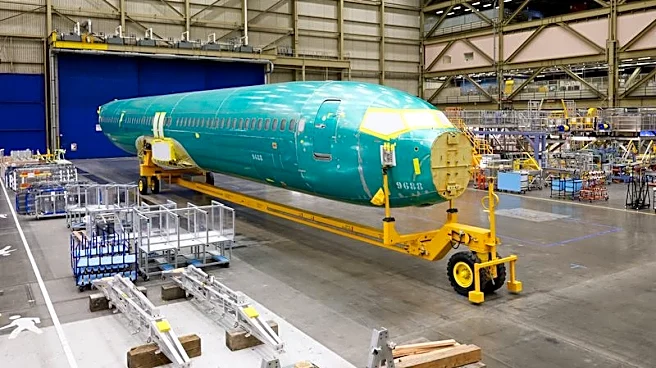
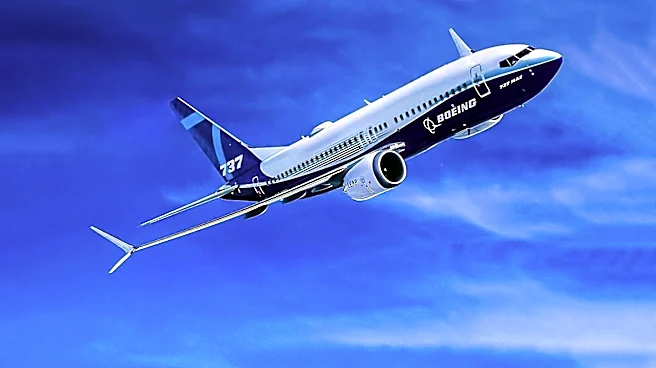
Boeing has reported a strong second quarter, with revenue increasing by 8% to $24.6 billion, driven by higher commercial airplane deliveries and increased defense volume. The company delivered 171 aircraft, the highest quarterly total since 2018, including
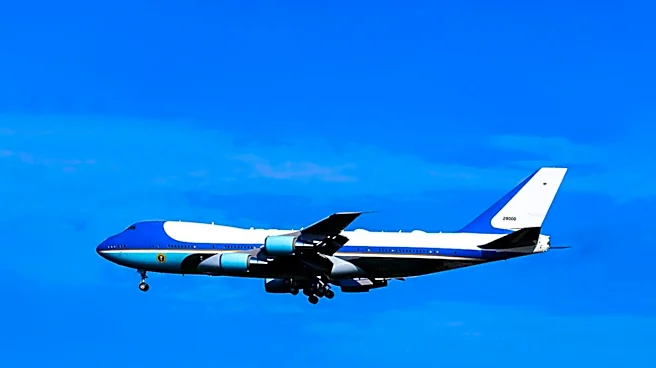
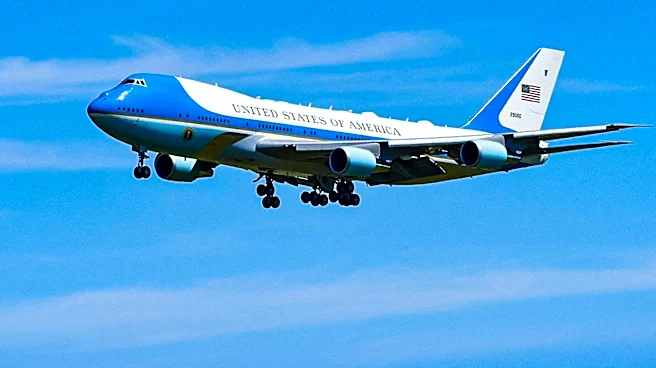
129 737s. Boeing's commercial airplanes segment saw an 8% revenue rise to $11.8 billion, despite a negative operating margin of 2.7%. The defense segment's revenue climbed 13% to $7.5 billion, although profitability was impacted by a $280 million charge on the VC-25B presidential aircraft program. Boeing reaffirmed its full-year free-cash-flow target of $1 billion to $3 billion, with debt declining by $8.2 billion year-to-date.
Why It's Important?
Boeing's performance is a key indicator of the aerospace industry's health, reflecting recovery from past challenges, including the 737 MAX grounding and pandemic-related disruptions. The increase in aircraft deliveries and revenue suggests a rebound in demand for commercial air travel and defense contracts. Boeing's ability to maintain its free-cash-flow target and reduce debt is crucial for financial stability and investor confidence. The company's progress in ramping up production and addressing supply chain issues will be closely watched by stakeholders, including airlines, defense clients, and investors.
What's Next?
Boeing plans to continue increasing 737 production, aiming for 47 aircraft per month, with further increases anticipated. The company is also working on resolving supply chain constraints and improving production efficiency. Boeing's focus on certification programs for new aircraft variants, such as the 737-7 and 737-10, will be critical for meeting delivery timelines. The defense segment will aim to improve profitability by completing fixed-price development programs and enhancing program execution. Boeing's future cash flow growth will depend on higher commercial deliveries and improved defense performance.