




What's Happening?
Tamar Haspel, a Washington Post Unearthed columnist and author, has sparked debate by questioning the health benefits and environmental impact of lettuce. Haspel argues that lettuce is responsible for a significant number of foodborne illnesses, primarily
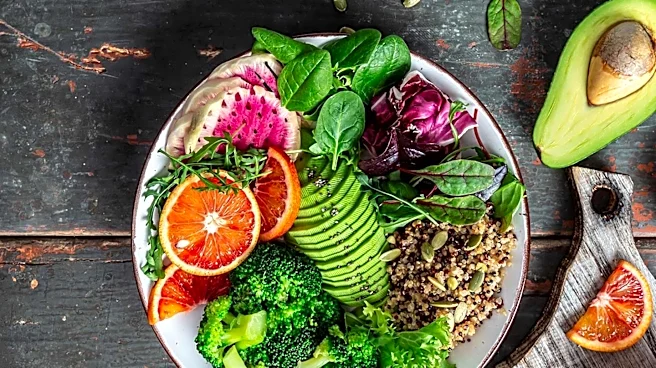
because it's consumed raw and its structure makes it difficult to clean. She also highlights that lettuce is 95% water, making it resource-intensive to grow, transport, and often leads to substantial food waste. Haspel suggests that the 'health halo' around salads, often lettuce-based, can be misleading, as many restaurant salads are high in calories due to added ingredients like cheese, dressings, and fried components. She advocates for a focus on staple crops like corn, potatoes, lentils, and chickpeas, which offer higher caloric and nutritional efficiency per acre.
Why It's Important?
Haspel's critique challenges deeply ingrained dietary beliefs and has significant implications for public health, agricultural practices, and consumer behavior in the U.S. By highlighting the prevalence of foodborne illnesses linked to lettuce and its environmental footprint, she prompts a re-evaluation of what constitutes a 'healthy' and 'sustainable' diet. Her arguments could influence food policy discussions, encouraging a shift towards more resource-efficient and nutrient-dense crops. For consumers, it encourages a more critical look at food choices, moving beyond superficial 'health halos' to consider actual nutritional content and environmental impact. This perspective could also impact the food industry, pushing for greater transparency in ingredient sourcing and preparation, and potentially leading to a diversification of 'healthy' food offerings.
What's Next?
Haspel's ongoing discussions and columns are likely to continue to generate debate among nutritionists, agricultural experts, and the general public. This could lead to increased scrutiny of food safety regulations for leafy greens and potentially inspire research into more sustainable and safer cultivation methods. Consumers might become more conscious of the ingredients in their salads and seek out alternative, more nutrient-dense vegetables. The food industry may respond by developing new plant-based products that utilize staple crops more effectively or by offering clearer nutritional information for their menu items. Haspel's advocacy for teaching children about nutrition and cooking could also gain traction, influencing educational programs and school lunch initiatives.
Beyond the Headlines
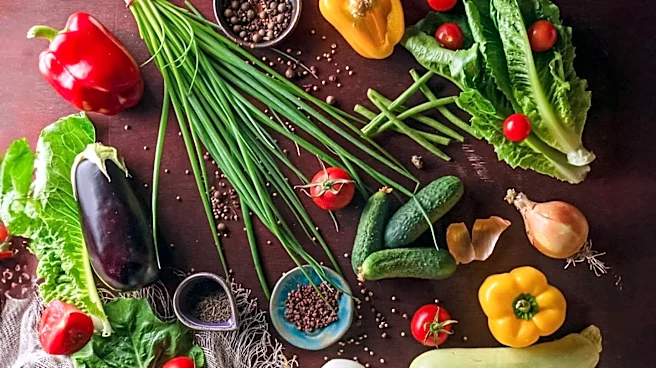
Beyond the immediate debate on lettuce, Haspel's work delves into the broader philosophical and societal aspects of food consumption. Her argument that 'vegetables in general are a luxury food' in an overfed society challenges the conventional wisdom that more vegetables are always better, especially when considering global food security and resource allocation. She also touches on the psychological aspects of eating, such as the 'health halo' effect and the tendency to overeat in restaurants, which contribute to the U.S.'s collective weight problem. Her insights into the differences in eating culture between the U.S. and Europe, particularly regarding snacking, highlight how societal norms profoundly impact dietary habits. This deeper analysis encourages a holistic understanding of food, encompassing not just nutrition but also culture, economics, and environmental sustainability.