

What's Happening?
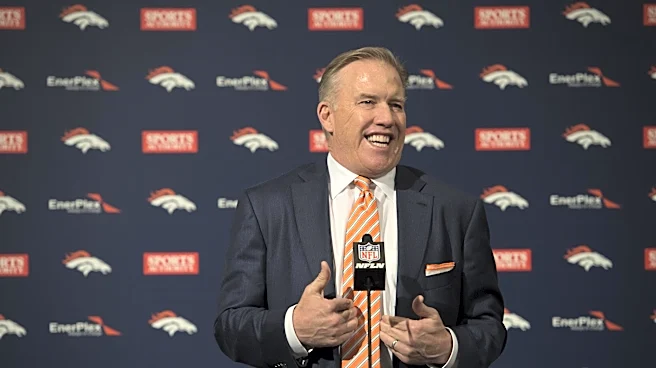
In 1998, former Denver Broncos quarterback John Elway was offered a 20% ownership stake in the team by then-owner Pat Bowlen. The offer, valued at $36 million, included the option to purchase 10% for $15 million and another 10% in exchange for $21 million in deferred
salary. Elway was given nine months to decide, during which he led the Broncos to a second consecutive Super Bowl victory before retiring in May 1999. Despite attractive conditions, including the right to sell shares back with a guaranteed return and interest, Elway allowed the deadline to pass. He later stated he did not envision himself in an executive role at that point in his life. This decision is highlighted as a significant missed financial opportunity in sports history.
Why It's Important?
The decision by John Elway to decline the ownership stake has become a notable example of the dramatic appreciation in value of professional sports franchises. In 2022, a group led by Rob Walton purchased the Denver Broncos for $4.5 billion. Had Elway accepted the 1998 offer, his 20% stake would have been valued at approximately $900 million at the time of the 2022 sale. This illustrates the immense financial growth potential within the sports industry, particularly for established NFL teams. The story underscores how early investment opportunities in sports franchises can yield extraordinary returns, transforming what might seem like a substantial initial investment into a far greater fortune over time. It also highlights the long-term financial implications of career and life decisions for high-profile athletes.
What's Next?
While John Elway's personal financial outcome from this specific opportunity is settled, the broader trend of increasing sports franchise valuations is expected to continue. Future sales of NFL teams will likely command even higher prices, further emphasizing the financial foresight of early investors. For current and former athletes, this case serves as a cautionary tale and a potential motivator to consider investment opportunities in sports ownership or related ventures. The narrative may also influence how current team owners structure future compensation or ownership incentives for star players, potentially offering equity as a way to retain talent or build long-term relationships. The story reinforces the idea that professional sports teams are not just athletic organizations but also highly valuable business assets.
Beyond the Headlines
This event transcends a simple financial missed opportunity, touching upon themes of personal ambition versus financial gain, and the evolving landscape of athlete wealth management. Elway's initial reasoning—not seeing himself as an executive—reflects a common dilemma for athletes transitioning from playing careers. It highlights the challenge of envisioning future roles and the potential for regret when market dynamics shift dramatically. The story also subtly points to the increasing financialization of sports, where teams are viewed as lucrative investments rather than solely as community or athletic entities. This shift has broader implications for team ownership structures, ticket prices, and the overall commercialization of professional sports, impacting fans and stakeholders alike.