






What's Happening?
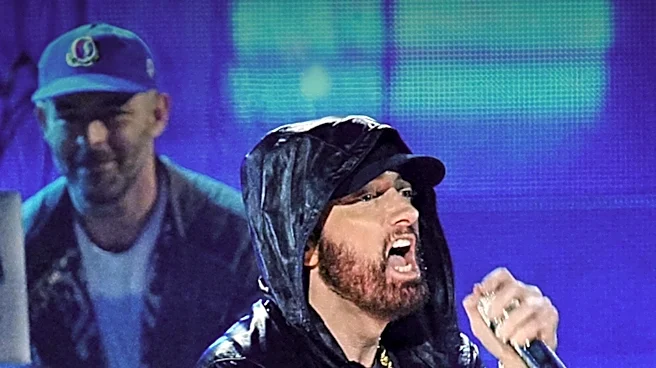
An AI-generated track, titled "I'm Back," purporting to be a new single from rapper Marshall "Eminem" Mathers, garnered over 100,000 views on YouTube. The video appeared prominently in search results for Eminem, even surpassing genuine tracks. The upload
lacked an official AI label from YouTube, with the only disclaimer, stating it was "Fan-made music videos inspired by Eminem, Slim Shady, and legendary Detroit hip-hop," hidden in the description. This led many fans to believe it was an authentic new release from the artist. The creator of the account, Milana Salaeva, stated there was no intention to mislead, and the video has since been removed. This incident highlights a growing trend of AI-generated content blurring the lines between fan tribute, parody, and outright deception online, impacting both artists and audiences.
Why It's Important?
This event underscores significant challenges for the music industry and consumers regarding content authenticity and intellectual property. For artists like Eminem, whose voices and styles can be replicated without permission, it raises critical questions about copyright enforcement, royalties, and the potential for AI to devalue original creative work. For audiences, the proliferation of convincing AI-generated content makes it increasingly difficult to distinguish authentic releases from synthetic ones, leading to confusion and potential misinformation. This situation also reveals how AI-made media can flood major platforms faster than moderation systems can respond, creating an environment where volume and novelty might be rewarded over originality. The incident with the fake Eminem track serves as a stark example of the broader implications of AI misuse, extending beyond entertainment to issues of fraud and trust.
What's Next?
The music industry, including labels like Universal Music (which controls Eminem's Shady Records), is actively engaging with AI firms such as Nvidia and Udio to address these emerging challenges. This suggests a move towards developing new frameworks and technologies to manage AI's role in music creation and distribution. There will likely be increased pressure on platforms like YouTube to implement more robust labeling and verification systems for AI-generated content to prevent future deception. Furthermore, discussions around copyright law and intellectual property rights will intensify as artists and legal experts seek to establish clear guidelines for the use of AI in replicating artistic styles and voices. The incident may also prompt greater public awareness campaigns about the nature of AI-generated content and the importance of critical consumption.
Beyond the Headlines
The deceptive Eminem track points to a deeper societal shift in how we perceive and consume media in the age of artificial intelligence. Beyond the immediate concerns of copyright and authenticity, it raises ethical questions about the nature of artistic creation and the value of human originality. If AI can convincingly mimic an artist's style, what does that mean for the artist's unique contribution and legacy? This development could lead to a re-evaluation of what constitutes 'art' and 'authorship.' Moreover, the scalability of AI impersonation, as evidenced by other fake rap artist accounts, suggests a future where digital identities can be easily manipulated, posing risks not only in entertainment but also in areas like political discourse and personal security. The incident serves as a microcosm of the broader challenges AI presents to trust, truth, and the very fabric of our information ecosystem.