






What's Happening?
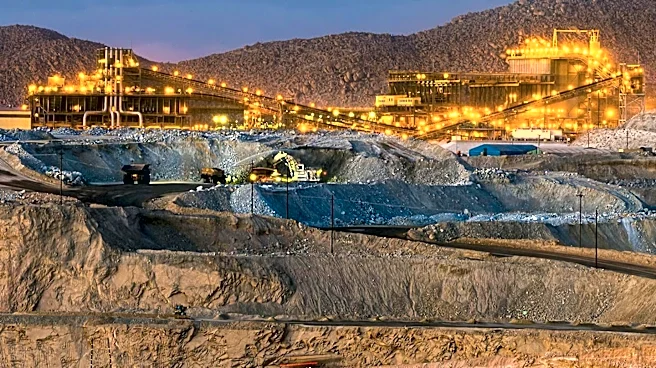
Critical Metals Corp (Nasdaq: CRML) has announced a significant advancement in its Tanbreez heavy rare earth project located in Greenland. The company successfully dissolved over 99% of eudialyte concentrate, yielding 19 ultra-high-purity rare earth products.
This development is a crucial step for the proposed refinery in Romania, which is designed to process up to 100,000 tons of eudialyte concentrate annually. The refinery is projected to produce approximately 27,943 tons per year of rare earth and critical metal products. The Tanbreez project is anticipated to generate substantial annual revenues, estimated between $1.8 billion and $2.2 billion. Furthermore, the project boasts a projected net present value of approximately $4.5 billion, with an internal rate of return of about 55%. This breakthrough positions Critical Metals Corp to become a significant player in the global rare earth supply chain.
Why It's Important?
This breakthrough by Critical Metals Corp holds significant importance for the U.S. and global industries, particularly in the context of critical mineral supply chains. Rare earth elements are essential components in numerous high-tech applications, including electric vehicles, renewable energy technologies, defense systems, and advanced electronics. The U.S. has been actively seeking to diversify its rare earth supply sources to reduce reliance on a single country, primarily China, which currently dominates the market. A new, high-purity source from Greenland, processed in Romania, could enhance supply chain resilience and reduce geopolitical risks associated with critical mineral procurement. Companies in sectors like automotive, defense, and technology stand to gain from a more stable and diverse supply of these vital materials. Conversely, nations heavily reliant on existing supply channels might face increased competition or pressure to adapt their sourcing strategies. The substantial projected revenues and high internal rate of return also indicate a potentially lucrative investment opportunity, attracting further capital into the critical minerals sector.
What's Next?
Following this processing breakthrough, Critical Metals Corp's immediate next steps will likely involve advancing the development and construction of its proposed refinery in Romania. The company will need to secure necessary permits, finalize engineering designs, and procure equipment to bring the refinery online. Successful operation of the refinery will be critical to realizing the project's full potential, including its projected annual production of rare earth and critical metal products. Further market engagement and securing long-term supply contracts with end-users in the U.S. and Europe will also be crucial. The high projected revenues and internal rate of return suggest that the company will continue to attract investor interest, potentially leading to further capital raises or strategic partnerships. The broader implications could include increased competition in the rare earth market and a potential shift in global supply dynamics as new sources become viable.
Beyond the Headlines
The successful processing of eudialyte concentrate by Critical Metals Corp extends beyond immediate economic gains, touching upon critical geopolitical and environmental considerations. The development of a new, high-purity rare earth source outside of traditional supply hubs, particularly from Greenland, could significantly bolster Western efforts to secure critical minerals. This move aligns with broader U.S. and European strategies to de-risk supply chains and foster greater self-sufficiency in strategic materials, reducing vulnerability to supply disruptions or geopolitical leverage. Environmentally, the project's success could spur innovation in more sustainable mining and processing techniques for rare earths, which have historically been associated with significant environmental impacts. The high purity of the extracted products might also lead to more efficient manufacturing processes for downstream industries. Culturally, the project could bring economic development to Greenland, a region with unique environmental and indigenous considerations, necessitating careful management of social and environmental impacts.