







What's Happening?
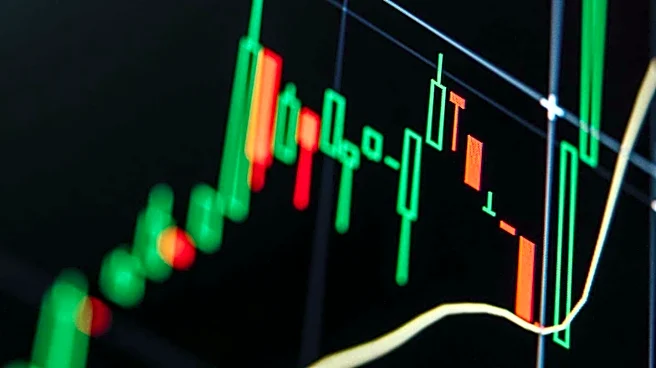
Oil markets have experienced a significant price increase due to renewed hostilities between the United States and Iran, raising concerns over energy security and potential disruptions to global shipping. Despite no actual supply outages, the possibility
of closing critical shipping corridors like the Red Sea has led traders to price in additional risk. This shift in market psychology indicates that oil prices are increasingly influenced by the potential for geopolitical disruptions rather than just actual supply losses. The Red Sea and the Strait of Hormuz are vital for global oil trade, and any threat to these routes can increase shipping costs, insurance premiums, and overall uncertainty in the supply chain.
Why It's Important?
The recent surge in oil prices underscores the growing importance of geopolitical risk in determining crude oil valuations. As tensions between the U.S. and Iran escalate, the market's sensitivity to potential supply disruptions highlights the need for resilient infrastructure and diversified supply chains. This development could lead to a structural change in how investors value crude oil, with energy security becoming a more prominent factor. The increased focus on geopolitical risks may also influence policy decisions and investment strategies within the energy sector, as stakeholders seek to mitigate potential disruptions and ensure stable supply routes.
What's Next?
If geopolitical tensions persist, the oil market may continue to assign a premium to uncertainty, affecting pricing strategies and investment decisions. Energy companies and policymakers may need to prioritize infrastructure resilience and explore alternative supply routes to reduce vulnerability to geopolitical disruptions. Additionally, the ongoing situation could prompt further diplomatic efforts to de-escalate tensions and stabilize global energy markets. As the geopolitical risk premium becomes a more consistent feature of oil pricing, stakeholders will need to adapt to a landscape where uncertainty plays a significant role in market dynamics.