





What's Happening?
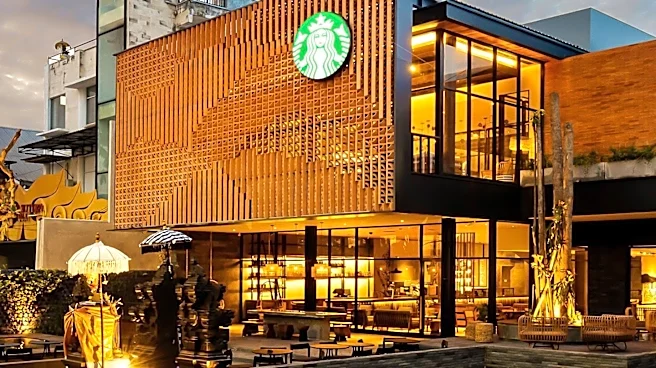
Starbucks is reportedly moving forward with plans to sell its Japan business, which includes 1,916 stores. Earlier reports this year indicated the company was exploring a stake sale in its Japanese operations. To facilitate this potential multibillion-dollar
transaction, Starbucks has engaged Citigroup and Morgan Stanley, according to a Bloomberg report citing unnamed sources. This development follows previous speculation, with Reuters having also reported on Starbucks weighing options for its Japan business. The move suggests a strategic re-evaluation of its international portfolio, particularly in one of its significant markets.
Why It's Important?
The potential divestiture of Starbucks' Japan business carries significant implications for the company's global strategy and the broader coffee market. Japan represents one of Starbucks' largest international markets, and a sale could signal a shift in its focus towards other regions or a move to streamline its operations. For investors, this could impact Starbucks' stock performance and its perceived growth trajectory. The involvement of major financial institutions like Citigroup and Morgan Stanley underscores the scale and financial significance of the potential deal. This transaction could also open opportunities for other players in the competitive Japanese coffee market, potentially leading to increased consolidation or new market entrants.
What's Next?
Starbucks is expected to continue working with Citigroup and Morgan Stanley to explore and execute the potential sale of its Japan business. The process will likely involve identifying potential buyers and negotiating terms for a multibillion-dollar deal. Further announcements regarding the progress of these plans are anticipated as the company moves forward. The outcome of this divestiture could influence Starbucks' future investment strategies in other international markets and potentially lead to a reallocation of resources within the company. The Japanese market will also be watching to see how the ownership change might affect the operations and brand presence of Starbucks in the country.
Beyond the Headlines
The decision to potentially offload a significant international market like Japan could reflect a broader trend among multinational corporations to optimize their global footprints and focus on core strategic regions. This move might be driven by factors such as market saturation, intense local competition, or a desire to unlock capital for investment in higher-growth areas. Ethically, such divestitures raise questions about the impact on local employees and the continuity of brand identity in a culturally distinct market. Legally, the transaction will involve complex regulatory approvals and financial structuring, highlighting the intricacies of large-scale international business deals. Culturally, the long-term presence of Starbucks in Japan has shaped local coffee consumption habits, and a change in ownership could subtly alter this dynamic.