







What's Happening?
Amundi, a major institutional investor, has decreased its holdings in Entergy Corporation by 31.1% during the first quarter, as per its latest filing with the Securities & Exchange Commission. This reduction involved selling 358,546 shares, leaving Amundi with 795,367
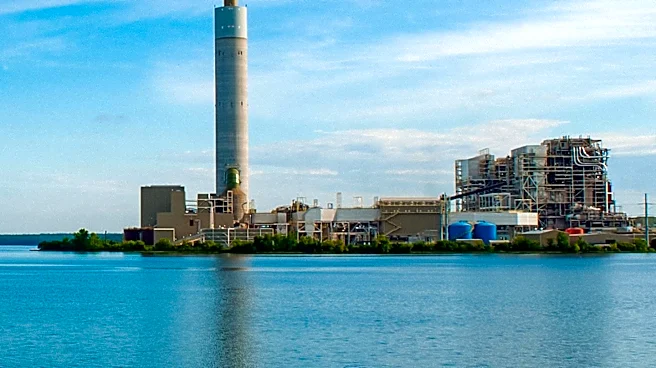
shares valued at approximately $89,367,000. This move is part of a broader trend among institutional investors, with several hedge funds adjusting their positions in Entergy. Notably, United Community Bank and Washington Trust Advisors Inc. have significantly increased their stakes, while others like Union Savings Bank and Fairway Wealth LLC have initiated new positions. Entergy, a New Orleans-based integrated energy company, operates across Arkansas, Louisiana, Mississippi, and southeast Texas, providing electricity through a mix of nuclear, natural gas, and hydropower resources.
Why It's Important?
The reduction in Amundi's stake in Entergy highlights shifting dynamics in institutional investment strategies, which can influence market perceptions and stock performance. Institutional investors hold a significant portion of Entergy's stock, and changes in their holdings can impact the company's market valuation and investor confidence. Entergy's operations in regulated utility services and competitive power production make it a key player in the energy sector, affecting regional energy supply and economic stability. The company's financial health and strategic decisions, such as insider trading activities and analyst ratings, are closely monitored by investors, influencing stock market trends and investment decisions.
What's Next?
Entergy's future performance will likely be influenced by ongoing analyst evaluations and market conditions. Analysts have set new price targets for Entergy, with ratings ranging from 'buy' to 'neutral,' reflecting varied expectations about the company's growth prospects and market position. Entergy's financial results, including its earnings per share and revenue performance, will be critical in shaping investor sentiment. Additionally, insider trading activities, such as recent stock sales by company insiders, may affect market perceptions and investor confidence. The company's strategic initiatives and regulatory developments in the energy sector will also play a role in determining its future trajectory.